Azerbaijan’s C6 entry sharpens the Eurasian dimension of the Black Sea Strategy

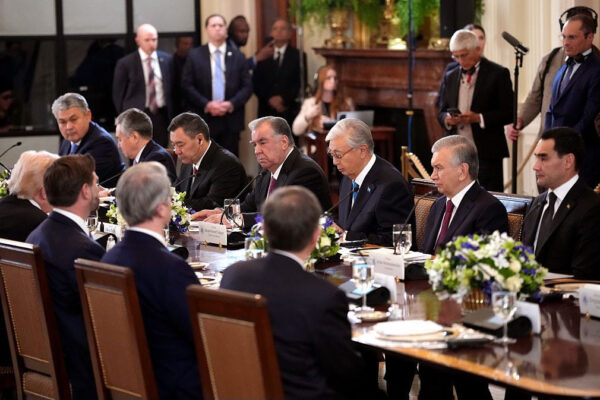
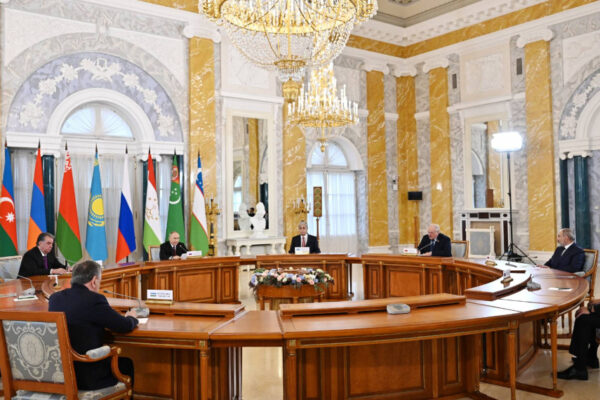
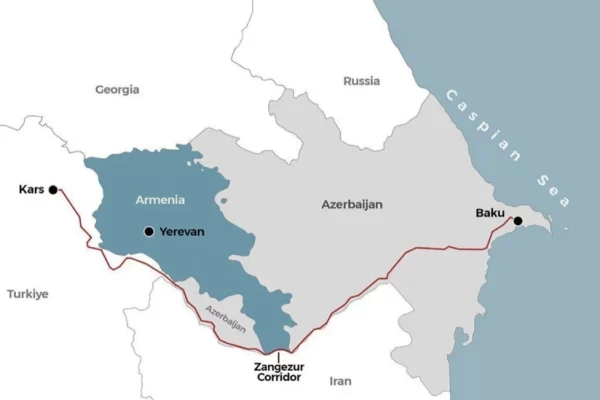
Azerbaijan’s entry into the C6 comes at a moment when the Black Sea and the Caspian are becoming more closely connected through transport, energy, and diplomatic initiatives. The new format gives political structure to a set of developments that were already unfolding in practice, from expanding port links to coordinated work on the Middle Corridor….

Read more

Georgian Azerbaijanis and their political participation

When looking into the demographics of Georgia, the first thing that comes into attention is the country’s multiethnic profile. According to the latest population census, Georgia’s total population amounts to more than 3.7 million people, of which 86.8% are ethnic Georgians. Meanwhile, the country harbors many ethnic minorities such as Azerbaijanis, Armenians, Russians, Ossetians, Yazidi…

Read more

Azerbaijan’s strategic position in 2025 and its growing global role

In 2025, Azerbaijan has moved beyond its traditional role as a regional actor and emerged as a country with meaningful influence in the wider geopolitical landscape. Policies introduced in the post-conflict period have brought economic and political stability, strengthening the country’s international standing in a noticeable way. Azerbaijan’s foreign policy priorities have been substantially recalibrated….

Read more

A new publication of CAERC, “InsurTech”, has been released

As a result of the cooperation between the Center for Analysis of Economic Reforms and Communication (CAERC), the Academy of Public Administration under the President of the Republic of Azerbaijan, and the Azerbaijan Insurers Association, a new textbook titled “InsurTech” has been published. The textbook was prepared under the scientific supervision of Vusal Gasimli, Executive…

Read more

Article by representative of the CAERC published in a Agricultural & Rural Studies journal

The article titled “Agricultural lands in Azerbaijan: Current usage situation, problems and solutions”, co-authored by Abdulrahim Dadashov, Deputy Head of the Monitoring and evaluation division of the Center for Analysis of Economic Reforms and Communication (CAERC), has been published in the highly regarded Agricultural & Rural Studies journal of Zhejiang Agriculture and Forestry University of the People’s Republic of…

Read more

The book “The Economic Potential of Islamic Countries” of the CAERC has been published by the prestigious Emerald Publishing

The first volume of the two-volume research work titled “The Economic Potential of Islamic Countries”, edited by Doctor of Economic Sciences, Professor Vusal Gasimli, Executive Director of the Center for Analysis of Economic Reforms and Communication (CAERC), has been published by the prestigious UK publishing house “Emerald”. The publication is indexed by Scopus and is…

Read more

Politics and physics: competing corridors and Azerbaijan’s leverage in Europe’s new gas order

Introduction In the evolving energy landscape of the Eastern Mediterranean and the Balkans, recent developments have spotlighted two competing yet potentially complementary gas corridors. Greece has revived its role through the Israel-Cyprus-Greece alignment and the November 2025 3+1 ministerial meeting in Athens, where the United States reiterated its commitment to building an Eastern Mediterranean Energy Center….

Read more

A Conceptual View Of Azerbaijan-European Union Relations – OpEd

Over the three decades since the restoration of the independence of the Republic of Azerbaijan, relations between Azerbaijan and the European Union (EU) have evolved dynamically. Encompassing political dialogue, economic cooperation, energy partnership, and security matters, these relations have become an important component of Azerbaijan’s foreign policy and the EU’s South Caucasus strategy. Official ties…

Read more

Azerbaijan joins the C5: implications for Eurasian regional architecture

When the long-standing C5 format of Central Asian cooperation formally expanded into a C6 on 15 November in Tashkent, Azerbaijan’s accession was framed as a natural extension of historical and linguistic affinities. Yet behind the rhetoric lies a structural transformation in Azerbaijan’s external orientation, and, arguably, in the conceptual geography of Eurasia itself. Understanding why…

Read more