
Moscow’s pipeline blackmail: Lessons from the Druzhba Blockade and the need for infrastructural sovereignty

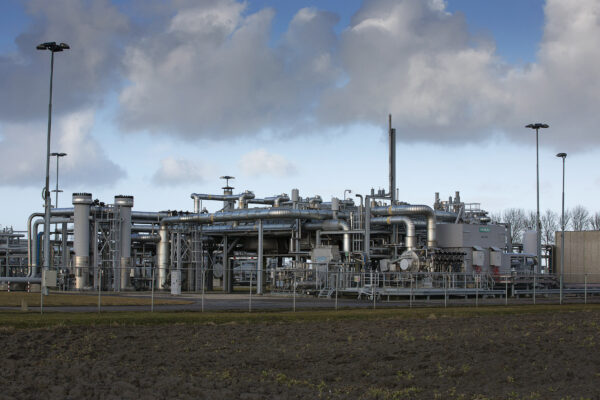
A Calculated Impasse On April 22, 2026, Russian oil started flowing again through the Druzhba pipeline to Europe, with reparations works handled by Ukrainians after a rupture amidst the events of the war. Yet, after a series of reports, it was confirmed that Russia would halt the passage of Kazakh oil sent to Germany through…

Read more

The end of pretending: the Putin-Pashinyan meeting reveals the depth of mutual frustration

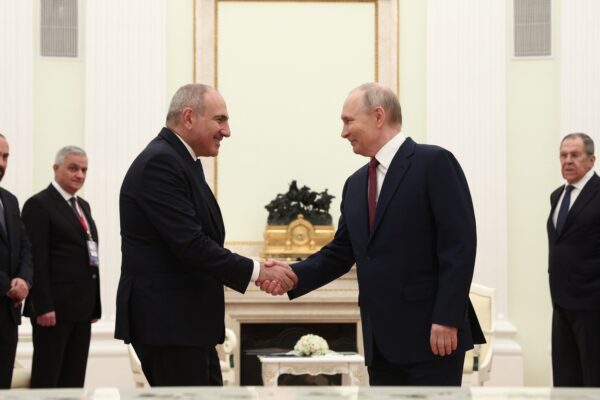
Last week, Armenian Prime Minister Pashinyan in a rather unexpected manner paid a visit to Moscow, reportedly fixed at his own request. During his visit, Armenian leader was accompanied by Deputy Prime Minister Mher Grigoryan and Foreign Minister Ararat Mirzoyan (Aysor.am, April 1). Arguably, the visit was dictated by the pre-election logic: Pashinyan, routinely accused…

Read more

Italy in Beijing: The 2024-2027 Action Plan’s legacy vs Sanchez-Xi understanding

The Italian Minister of Foreign Affairs Antonio Tajani has just concluded his three-day mission in China, where he met with his Chinese counterpart Wang Yi together with the Chinese Minister of Commerce Wang Wentao in Beijing. The diplomatic meeting was part of the continuation of the 2024–2027 Italy–China Three-Year Action Plan, which was  signed by…

Read more

Moldova at a strategic crossroads: how the revival of the union debate reveals Moldova’s geopolitical uncertainty

In early 2026, Moldovan President Maia Sandu’s remark unexpectedly rekindled a highly sensitive and historically charged issue: the potential unification with Romania. During a public interview, she said she would personally support such a move if it were decided in a national referendum. While presented as a personal view rather than an official policy, the…

Read more

PIVOT TO THE EAST: What Armenia and Azerbaijan Can Learn from Central Asian Cooperation?

Policy analysis of the Armenia-Azerbaijan conflict has relied, often unreflectively, on a narrow set of Western-brokered settlements as its comparative reference points. Yet these cases carry with them assumptions that bear little resemblance to the post-Soviet realities of the region. The result has been a policy conversation that is well-furnished with precedent but poorly matched…

Read more

Rusif Huseynov contributed chapter to a newly published book — Turkey in Eurasia: Endeavors and Encounters

Rusif Huseynov contributed chapter to a newly published book — Turkey in Eurasia: Endeavors and Encounters. He is co-author of Chapter 11: “Political Economy of Turkey’s Policies in Eurasia,” alongside Anar Valiyev and Shujaat Ahmadzada. This book provides an analysis of Turkish foreign policy towards Eurasia in the post-Soviet era. Focussing on the sub-regions of the…

Read more

Measuring Strategic Pressure and Global Energy Risks in the Strait of Hormuz in 2026

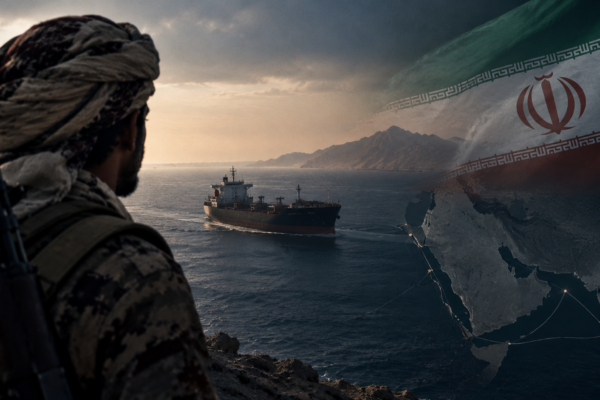
The Strait of Hormuz returned to the center of global strategic risk calculations following the launch of the “Smart Control of the Strait of Hormuz” exercise on February 16, 2026. During the drill, the commander of the Islamic Revolutionary Guard Corps Navy publicly stated that Iranian forces could close the waterway “upon orders from the…

Read more