IDD Releases Summer 2026 Edition of Baku Dialogues

The Institute for Development and Diplomacy (IDD) at ADA University is pleased to announce the publication of its latest edition of Baku Dialogues, its flagship English-language quarterly policy journal.   The Summer 2026 issue brings together leading scholars and policy practitioners to examine the major geopolitical, economic, and strategic developments shaping the Silk Road region…

Read more

The Geopolitics Of Connectivity Power: Why Azerbaijan Holds The Advantage – OpEd

Key Takeaways: Azerbaijan dominates regional transit infrastructure: With fully operational East-West (Middle Corridor) and North-South routes, expanded BTK railway (now 5 million tons capacity), and Port of Alat upgrades (to 25 million tons), Azerbaijan handles millions of tons of freight annually and continues expanding an existing network. Armenia’s “Crossroads of Peace” initiative faces severe constraints: Mountainous terrain,…

Read more

Azerbaijan and Turkmenistan Deepen Strategic Partnership

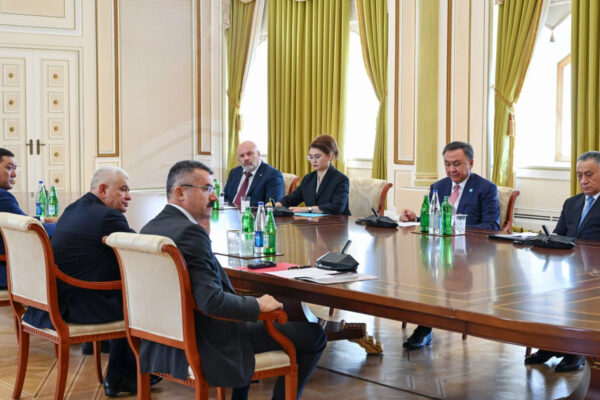
Executive Summary: Turkmen President Serdar Berdimuhamedov met with Azerbaijani President Ilham Aliyev in Baku on June 22, where they signed 13 agreements expanding cooperation in energy, transport, customs, industry, and diplomacy, institutionalizing a broader strategic partnership amid shifting Eurasian dynamics. Azerbaijan and Turkmenistan prioritized trans-Caspian transport integration by advancing customs modernization, port cooperation, and east–west…

Read more

EU policy toward Azerbaijan: Why Brussels must move beyond political dialogue

European Commission President Ursula von der Leyen’s visit to Azerbaijan and Armenia this month has reignited conversations about the nature of the EU’s role in the South Caucasus. At face value, the European Union continues to devote increasing attention to the region. In the past few months, politicians in Brussels appear to have acknowledged the…

Read more

Beyond Borders: Rethinking The Middle Power Concept Through The Case Of Azerbaijan – Analysis

Key Takeaways The definition of a middle power has shifted from material size and military strength to behavioral traits like niche diplomacy, norm entrepreneurship, and proactive international engagement. Azerbaijan increasingly qualifies as a modern middle power through energy diplomacy, regional connectivity projects, hosting global events (COP29), and acting as a bridge-builder. This reflects a broader…

Read more

Connecting The Turkic World: The Strategic Legacy Of The Shusha Declaration – OpEd

Türkiye and Azerbaijan commemorated the fifth anniversary of the Shusha Declaration on Allied Relations on June 15, 2026. Shortly following the conclusion of the Second Karabakh War, the document was signed in the cultural capital of Azerbaijan, officially elevating bilateral relations from strategic partnership to alliance (President.az, June 15, 2021) Five years later, the significance…

Read more

Azerbaijan’ s foreign policy as a middle power and its role in promoting regional peace

In the contemporary system of international relations, the influence of states is determined not only by their territorial size or population, but also by their diplomatic activism, economic potential, military capabilities, and capacity to shape international processes. From this perspective, the Republic of Azerbaijan, with its growing influence at both regional and global levels in…

Read more

Armenia’s Parliamentary Elections: A view from Azerbaijan

Armenia’s June 7 parliamentary elections produced a result whose significance extends well beyond the country’s borders. With Civil Contract, led by current Prime Minister Nikol Pashinyan, securing 49.81 per cent of the vote, the Strong Armenia Alliance of Samvel Karapetyan at 23.29 per cent, and Robert Kocharyan’s Armenia Alliance at 9.94 per cent, Pashinyan retains…

Read more

Digitalization Of The Middle Corridor: Azerbaijan And The OTS Connectivity Agenda – OpEd

The Middle Corridor has emerged as one of the key connectivity corridors between China, Central Asia, the Caspian region, the South Caucasus, Türkiye and Europe. In the face of evolving geopolitical and economic conditions, this route has become increasingly important as a dependable alternative for East-West trade and transit. Nevertheless, the Middle Corridor’s future competitiveness…

Read more