From Munich to Belgrade: mapping Baku’s strategic shift

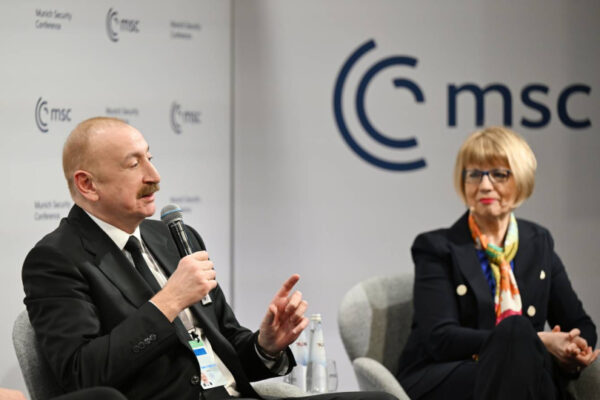
 In February 2026, Azerbaijan’s foreign policy doctrine entered a new phase marked by proactive, results-driven diplomacy. President Ilham Aliyev’s participation in the Munich Security Conference on 13–15 February, followed immediately by official engagements in Belgrade on 15 February, forms a single strategic trajectory that consolidates Baku’s position on the Eurasian geopolitical map as a middle…

Read more

Overview of Social Research Center’s activities in 2025

The historic Victory achieved in the 44-day Patriotic War resulted in the liberation of Azerbaijan’s occupied territories and introduced new ideological and political challenges for the Azerbaijani state. Under the leadership of President Ilham Aliyev, the model of a victorious state strengthened national cohesion at home and elevated Azerbaijan’s geopolitical standing across the region and…

Read more

Baku–Abu Dhabi axis: from geostrategic partnership to global humanitarian leadership

President Ilham Aliyev’s official visit to the United Arab Emirates this week, along with the presentation of the Zayed Award for Human Fraternity, signals Azerbaijan’s entry into a qualitatively new and more advanced phase of its foreign policy. This development goes beyond a display of cordial bilateral ties. It represents high-level international recognition of Azerbaijan’s…

Read more

Azerbaijan as a singular reference point for global peace

Contemporary international security is passing through a period of deep fragmentation. This phase is marked not only by the growing number of interstate conflicts, but also by the erosion of traditional alliances and an unprecedented level of global instability. Against this backdrop, the Republic of Azerbaijan stands out as a distinctive actor in international relations….

Read more

Presidential diplomacy at Davos and its geopolitical and economic impact

Presidential-level meetings held within the framework of the World Economic Forum have a significant influence on the way contemporary international relations take shape. The Davos platform offers heads of state a distinctive setting for advancing multilateral diplomacy, strengthening strategic partnerships, and promoting national economic interests on a global stage. Davos meetings offer several notable advantages…

Read more

Strategic value of stability amid chaos: Azerbaijani model and strong leadership factor

The contemporary system of international relations is experiencing its most severe period of turbulence in recent decades. The mechanisms of international law that took shape in the post–Cold War era and once provided a degree of stability are no longer capable of managing emerging crises. Escalating confrontation among global power centers, the expanding geography of…

Read more

Azerbaijan’s global ascent: President Ilham Aliyev’s leadership and 2025 strategy

As the first quarter of the 21st century draws to a close, Azerbaijan, under the leadership of President Ilham Aliyev, is completing its transformation from a regional power hub into a global actor. For the country, 2025 marks a critical juncture, defined not only by domestic development goals but also by the consolidation of its…

Read more

From mass migration to brain drain: political impacts and future outlook

Brain drain represents the erosion of a country’s scientific and intellectual foundations and, ultimately, the loss of its future social potential. Yet the core issue lies not in migration as a whole, but in the brain drain embedded within today’s global migration flows. The loss generated by mass population movements does not exert the same…

Read more