Kazakhstan joins the Abraham Accords: Pragmatism or Symbolism?

Kazakhstan’s accession to the Abraham Accords—anticipated in some political circles—may still raise eyebrows. Unlike the original signatories, who were establishing relations with Israel from scratch, Kazakhstan has long maintained cordial ties with the Jewish state. Israel was among the first countries to recognize Kazakhstan’s independence in 1992, and since then, the bilateral cooperation has expanded…

Read more

A New Geopolitical Actor – Organisation of Turkic States – Stretches From China to Europe

Is the unipolar world dead? Competing groups – The SCO (Shanghai Cooperation Organisation, BRICS (Brazil-Russia-India-China-South Africa), and OTS (Organisation of Turkic States) – are becoming more influential and increasingly optimistic about their prospects. Of these, only the OTS has sought to maintain a balanced position between the West and East (Russia, China) without becoming embroiled…

Read more

The Washington calculus: expected outcomes of Al-Sharaa’s visit to Washington

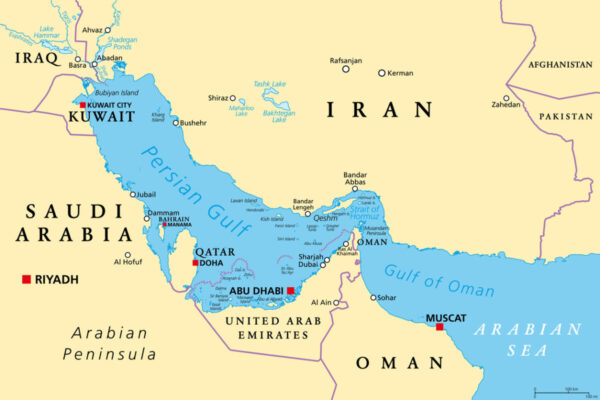
Speaking at the Manama Dialogue in Bahrain, hosted by the International Institute for Strategic Studies (IISS), U.S. Special Envoy for Syria Thomas Barrack announced that Syrian President and HTS leader Ahmed al-Sharaa would visit Washington. It will be the first time a Syrian head of state has visited Washington since the country’s independence in 1946….

Read more

Vusal Gasimli to present the book “Middle Corridor” in Brussels

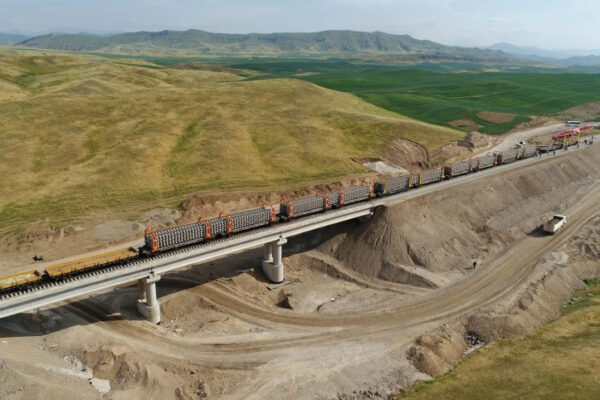
Professor Vusal Gasimli, Executive Director of the Center for Analysis of Economic Reforms and Communication (CAERC), will present the book “The Middle Corridor: Navigating Current Realities and Embracing Future Prospects” in Brussels, the capital of Belgium. The presentation will take place on November 24, 2025, during a conference on the “Middle Corridor” hosted by the…

Read more

Post-conflict Azerbaijan transforms into a confident regional power

During the post-Soviet period, Azerbaijan experienced territorial fragmentation, faced various geopolitical challenges, and relied on support from external powers.  Nearly 20 per cent of its lands were occupied and destroyed by Armenia, and close to 700,000 citizens were displaced. Peace negotiations repeatedly failed as Armenia, emboldened by its alliance with Russia, ignored international law and…

Read more

The strategic significance of the SOCAR–IP acquisition for Italy and the new European energy order

The announcement made on 23 September 2025 regarding the purchase of Italian Petroli (IP) by Azerbaijan’s state oil company SOCAR signifies more than merely a corporate deal. It illustrates the transformation of the Italian and European energy sectors. Two years after the rupture with Russian hydrocarbons, the continent’s energy map is redrawn through diversification, new…

Read more

Azerbaijan Calls for Deeper Cooperation within the Organization of Turkic States

The 12th Summit of the Organization of Turkic States (OTS), held on 7 October 2025 in Gabala, Azerbaijan, marked a decisive stage in the evolution of integration within the Turkic world. Under the theme “Regional Peace and Security,” the summit, chaired by President Ilham Aliyev, brought together leaders from Azerbaijan, Kazakhstan, Kyrgyzstan, Türkiye, Uzbekistan, and…

Read more

Bilateral European Cooperation Recasts Transatlantic and Regional Security

The relationship between the United States and ‘Europe’, a broad term which increasingly requires clarification, remains an integral part of contemporary international affairs. In addition to the volume and geopolitical significance of the ties per se, the ‘state’ of affairs between these two centers of power plays a key role in influencing the balance of…

Read more