The Good, the Bad, and the Ugly: Serbian energy crisis amid US sanctions, Russia’s ouster, and Hungarian rescue

On 9 October 2025, US Department of the Treasury (OFAC) has imposed secondary sanctions which target Russian oil and gas sectors and extend their pressure on NIS (Naftna Industrija Srbije), the main Serbian energy company, because of the majority share owned by the Russian Gazprom Neft (44.85 per cent) and JSC Intelligence (11.3 per cent)….

Read more

Transition to an Innovation Ecosystem: Azerbaijan’s Strategic Choice

The idea of transforming oil capital into human capital, articulated years ago, is today presented with broader and deeper substance aligned with global challenges. The key point emphasized by President Ilham Aliyev is that natural resources are not an end in themselves, but a means, and that the main guarantors of sustainable development are science,…

Read more

TRIPP and the Armenia–U.S. strategic partnership

The recent meeting in Washington between Armenian Foreign Minister Ararat Mirzoyan and U.S. Secretary of State Marco Rubio, coupled with the official announcement of the implementation framework for the TRIPP initiative, signals the entry of the South Caucasus peace process into a qualitatively new phase. While previous stages were largely dominated by political declarations and…

Read more

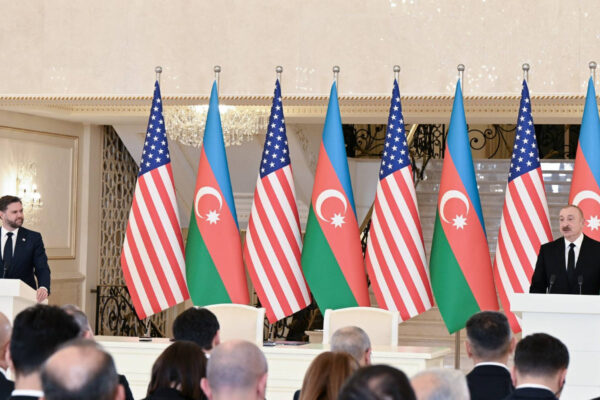
US-Azerbaijan relations in the context of new geopolitical realities

In recent years, transformations in global and regional politics have elevated US-Azerbaijan relations to a qualitatively new level. In particular, the conclusion of the Armenia-Azerbaijan conflict in 2020 with Azerbaijan’s victory, followed by intensified competition among global powers, has generated new geopolitical realities in the South Caucasus. Against this complex global and regional backdrop, Azerbaijan…

Read more

Georgia’s strategic ambiguity in a recalibrating South Caucasus

The South Caucasus is entering a phase of geopolitical recalibration that is both overdue and transformative. For more than three decades, the region was locked in a structural paralysis shaped primarily by the Armenia-Azerbaijan conflict. The Karabakh conflict created a logic of fragmentation that dictated political behavior: Armenia’s reliance on Russia hardened, Azerbaijan’s access to…

Read more

AZERBAIJAN’S RISING STRATEGIC ROLE WITHIN THE D-8 PLATFORM

President Ilham Aliyev’s recent interview with local television channels offers an important analytical lens through which Azerbaijan’s evolving position in the international system can be assessed. Among the most significant elements of the interview is Azerbaijan’s accession to the D-8 Organization for Economic Cooperation, a development that reflects not merely a diplomatic achievement, but a…

Read more

THE REAL FACE OF THE 907TH AMENDMENT AND U.S.–AZERBAIJAN RELATIONS

President Ilham Aliyev’s recent interviews with domestic television channels provide a conceptual political analysis that unveils the structural logic and institutional character of U.S.–Azerbaijan relations. The President presents the 907th amendment not as an isolated episode or the product of individual relationships, but through the prism of international system mechanisms, the hierarchy of great power…

Read more