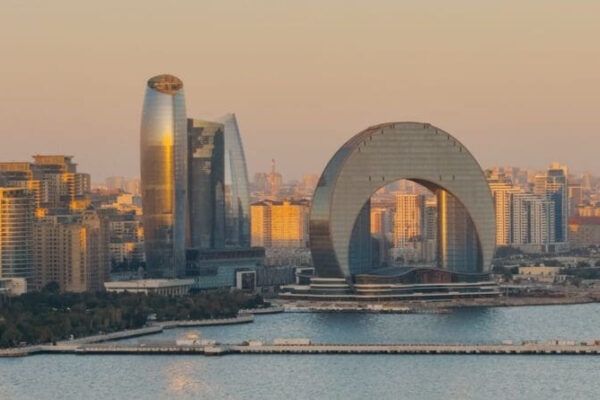
Azerbaijan as a singular reference point for global peace

Contemporary international security is passing through a period of deep fragmentation. This phase is marked not only by the growing number of interstate conflicts, but also by the erosion of traditional alliances and an unprecedented level of global instability. Against this backdrop, the Republic of Azerbaijan stands out as a distinctive actor in international relations….

Read more

AZERBAIJAN’S ENDURING SECURITY PRIORITIES IN A VOLATILE REGIONAL ENVIRONMENT

President Ilham Aliyev’s remarks in his interview with Euronews at the Davos Forum, where he expressed concern about internal instability in Iran, provide an important window into Azerbaijan’s evolving security doctrine. His emphasis on the triad of stability, predictability, and peace reflects a rational–realist understanding of security, grounded not in ideological posturing but in strategic risk management and regional…

Read more

THE WORLD AFTER DAVOS: POWER, FRAGMENTATION AND THE RETURN OF STRATEGIC COMPETITION

The Davos Forum has gradually evolved from an economic dialogue platform into an ideological laboratory where the future architecture of global power, security, and governance is openly negotiated. In the emerging post-liberal order, Davos debates increasingly reflect not optimism about integration, but anxiety about fragmentation, systemic rivalry, and the erosion of long-standing norms. What now…

Read more

Presidential diplomacy at Davos and its geopolitical and economic impact

Presidential-level meetings held within the framework of the World Economic Forum have a significant influence on the way contemporary international relations take shape. The Davos platform offers heads of state a distinctive setting for advancing multilateral diplomacy, strengthening strategic partnerships, and promoting national economic interests on a global stage. Davos meetings offer several notable advantages…

Read more

Kadyrov’s Declining Health Spurs Succession Speculation

Executive Summary: Rumors have circulated throughout January that the strongman leader of Chechnya, Ramzan Kadyrov, is suffering from kidney failure, sparking speculation about his successor and the durability of personalized regional governance in Russia amid leadership transition. Kadyrov has attempted to institutionalize a quasi-hereditary system by promoting family members into senior political and security roles….

Read more

Rusif HUSEYNOV: “Direct Armenian–Azerbaijan Engagement Is a Genuine Breakthrough”

20.01.2026 (Caucasian Journal) Today, the Caucasian Journal welcomes Dr. Rusif HUSEYNOV, a distinguished Azerbaijani political analyst and the co-founder and CEO of the Baku-based think tank, the Topchubashov Center. He has first-hand knowledge of key developments not only in Baku but across all regional directions.  A widely cited expert, Dr. Huseynov offers an essential regional perspective on the evolving dialogue around…

Read more

The Good, the Bad, and the Ugly: Serbian energy crisis amid US sanctions, Russia’s ouster, and Hungarian rescue

On 9 October 2025, US Department of the Treasury (OFAC) has imposed secondary sanctions which target Russian oil and gas sectors and extend their pressure on NIS (Naftna Industrija Srbije), the main Serbian energy company, because of the majority share owned by the Russian Gazprom Neft (44.85 per cent) and JSC Intelligence (11.3 per cent)….

Read more