Key Takeaways:
- India’s rising economic power has fostered overconfidence, leading to strategic setbacks as New Delhi overestimates its geopolitical leverage and fails to convert growth into effective global influence.
- Assertive Hindu-nationalist diplomacy, zero-sum rivalry with Pakistan, and multi-alignment (including continued Russian oil purchases) have strained ties with the United States, alienated neighbours such as Bangladesh, and left initiatives like the Quad largely ineffective.
- Outreach efforts in the South Caucasus (arming Armenia against Azerbaijan) and attempts to isolate Pakistan have backfired, enhancing rivals’ diplomatic standing while narrowing India’s options and exposing the limits of its current foreign-policy approach.
In recent decades India emerged as a key global geoeconomic player. Its economy stands as the sixth-largest economy in the world, with nominal GDP approximately $4.15 trillion. By some calculations, India is the fourth-largest economy, recently surpassing Japan. With its economic growth and population, India began flexing muscles on global political stage, trying to imitate China’s newly developed posture.
Politicians, pundits and experts – all speak increasingly about India’s potential, which probably blinded the country’s leadership to a sober assessment of its status. India, having declared many goals, projects and platforms, flounders on several fronts, both imitating Chinese power and advancing its own agenda.
In several projects and foreign policy directions, India is currently going through a crisis. New Delhi, while trying to portray itself as anti-China balance in Asia, thus attracting the American interest, has a series of problems with the United States. Rivaling Pakistan, an ally of China, New Delhi failed to forge an anti-Islamabad alliance in the West. Getting into the QUAD did not help generate the necessary geopolitical advantages. Trying to lead the global south, India did not garner enough support for its leadership position – whether in the UN, BRICS or other larger international platforms despite the fact that India was once a founding and leading member of the Non-Aligned Movement. Anti-Muslim rhetoric and policy did not make the Christian Right in the West sympathetic to the Indian image. Vice versa, Indian crime networks and businesses caused a negative reaction in many Western countries.
India’s hope of developing international transport routes such as IMEC as a geoeconomics tool is under question in the current circumstances. India’s outreach to Armenia to punish Azerbaijan for the latter’s relations with Pakistan did not produce tangible results in the South Caucasus. The list can be continued.
Why is the country with a big potential failing on many fronts?
Once, I attended a conference in China and talked privately with a former Chinese official about the China-India rivalry, and problems which India creates for China in many international organizations like the SCO, BRICS, etc. When we started talking about the QUAD, the Chinese official joked that he advised the Chinese leadership to stop worrying about the Quad – an organization where India is a member, is doomed to failure.
India’s rising economic power made the government of Narendra Modi self-indulgent. The success on the economic front does not make the country’s geopolitical outreach automatically successful.
But let’s dissect how India’s policy unraveled.
India’s strategic location and rapidly growing economy have made it an increasingly important partner for the United States and other Western countries. Unlike China, which is often viewed as a strategic competitor, or Pakistan, which has frequently been associated with concerns over terrorism, India was widely perceived, or more precisely portrayed, in the West as a democratic and economically attractive partner. Compared with other South Asian countries such as Bangladesh, Sri Lanka, or Nepal, India offers a vast consumer market, a large labor force, and significant opportunities for foreign investment, making it an appealing destination for multinational corporations.
According to some scholars, these geopolitical and economic dynamics have also benefited supporters of Hindutva, particularly among upper-caste Hindu communities, both within India and across the diaspora. They argue that the international security environment following the September 11, 2001 attacks reinforced narratives that disproportionately associated terrorism with Muslims, thereby shaping public perceptions despite documented instances of violence committed by Hindu extremist groups. The same scholarship further contends that segments of the Indian diaspora in North America have cultivated the image of highly successful “model minority” immigrants while simultaneously providing financial and political support for Hindu nationalist organizations.
India claimed to be the largest democracy in the world, in contrast with communist China. Despite the personality cult cultivated around Narendra Modi, a rigid caste system, and anti-Muslim and anti-minority policies, India had a favorable image in the Western liberal media until recently.
Sensing the anti-Chinese tendencies, New Delhi doubled down on this narrative once Donald Trump was elected President of the United States. Indian Prime Minister Narendra Modi was among the first foreign leaders to meet President Donald Trump following his return to the White House. At that stage, the cordial personal rapport established during Trump’s first presidency appeared largely intact, despite persistent U.S. concerns over India’s trade surplus.
However, bilateral relations deteriorated rapidly after the brief military confrontation between India and Pakistan in May 2025.
Following the cease-fire, which brought the conflict to an end within a week, President Trump claimed that the United States had helped secure the agreement by using the prospect of trade measures as leverage. India firmly rejected this assertion, maintaining its long-standing position against third-party involvement in its dispute with Pakistan. In contrast, Pakistan welcomed Trump’s characterization of events and publicly supported his nomination for the Nobel Peace Prize. These conflicting interpretations of the cease-fire further strained US-India relations and marked a significant downturn in bilateral ties.
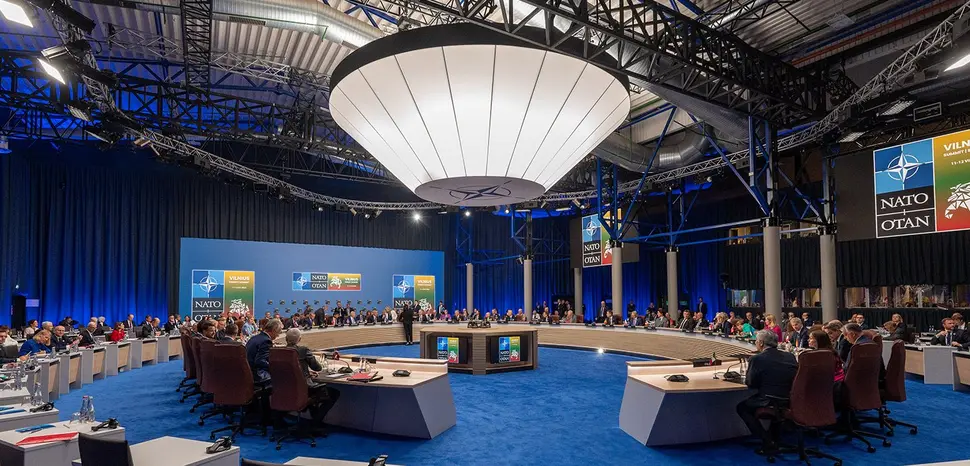
The Quad (officially known as the Quadrilateral Security Dialogue), a strategic, informal security forum consisting of the United States, Japan, Australia, and India, was created with fanfare in 2007 and reinforced in 2017 with Trump’s approval. New Delhi thought that the momentum was India’s and that the country had become indispensable to the United States as a counterweight to China. Today, the Quad appears “dead”, especially after the cancellation of the summit meeting in India. Some critics argue that changing US priorities (President Donald Trump has a different view on this alliance) and regional power shifts have paralyzed it, a situation that does not favor New Delhi’s anti-China efforts.
Overall, India’s regional posture was overblown and overestimated. The United States did not like India’s oil relations with Russia, nor did it appreciate India’s anti-China posture, as New Delhi’s show-off raised alarm among policy-makers.
India’s diplomatic approach has become increasingly controversial during the last decade, with many observers attributing this shift to the government’s emphasis on Hindu nationalism. While some members of the diplomatic establishment have been reluctant to embrace this direction, others – including External Affairs Minister S. Jaishankar – have actively promoted it.
This diplomatic style is characterized by greater confidence, assertiveness, and an explicit emphasis on national identity and sovereignty, reflecting India’s aspiration to assume a more prominent role in global affairs. Minister Jaishankar has gained attention for his willingness to challenge Western officials, policy experts, and journalists when India’s positions diverge from those of its partners. He has consistently advocated the principles of “strategic autonomy” and “multi-alignment,” arguing that India’s foreign policy should be guided primarily by its own national interests rather than by alignment with any single bloc.
During his visit to Russia in September 2025, Indian Prime Minister Narendra Modi reaffirmed the close relationship between New Delhi and Moscow, telling President Vladimir Putin that the two countries had “walked together shoulder to shoulder.” Indian officials also emphasized that the country would continue purchasing energy wherever it could secure “the best deal.” Consequently, it was unsurprising that India-US relations deteriorated significantly after the Trump administration imposed an additional 25 percent tariff on Indian goods in response to India’s continued imports of Russian oil.
Beyond energy cooperation, India has also been identified as an important channel through which Russia has gained access to goods restricted under Western sanctions. Indian entities have supplied Russia with Nvidia artificial intelligence chips, octogen explosives, and Swiss-made precision tools used in intelligence and military systems. The report further states that Indian companies continued exporting explosives to Russia despite repeated warnings from the United States.
The economic framework that India expected to strengthen its national power has instead become increasingly vulnerable to disruptions resulting from the Trump administration’s economic policy. The US Deputy Secretary of State Christopher Landau said, “India should understand that we’re not going to make the same mistakes with India that we made with China 20 years ago”. The American official was blunt about the primary interest of the United States in not allowing another power to threaten Washington’s interests. “The next thing we know, you’re beating us in a lot of commercial things. We’re going to make sure that whatever we do, it’s fair to our people, because ultimately we have to be accountable to our own people, just as the government of India has to be accountable to its people”, said Mr. Landau.
India remains focused on its historic rival Pakistan. New Delhi has approached its western neighbor with a zero-sum mindset, but many countries refused to accept the rise of relations with India at the expense of diminishing ties with Pakistan.
India’s anti-Pakistani policy was particularly in search of allies in the West. Narendra Modi’s ideology based on Hindu nationalism was promoting several narratives to attract like-minded policy-makers. Anti-Muslim narratives were blended with ideas portraying Pakistan as a country harboring terrorism on one side, and pro-Aryan arguments on the other. The array of messages was directed at Christian fundamentalists and certain nationalist groups in the West but resulted in severe criticism of Indian malignant influence and xenophobic policy.
The rationale of the Indian policy with the West rests on the assumption that the Indian ruling party – BJP’s brand of Islamophobia has found an eager partner among the far-right. Furthermore, with the numerous diasporas in the West, elected officials would think twice before criticizing India, already a rising and influential power, for fear of angering their constituents. However, these pursuits fell short – the rising xenophobia has a negative effect on both Muslims and Indians in the West.
The arrogance of Indian diplomacy led to the alienation of even its closest ally, Bangladesh. New Delhi’s unwavering support for former Bangladeshi leader Hasina’s regime alienated the masses in the country. New Delhi then blamed China and Pakistan for undermining India’s ties with Dhaka. However, as Sushant Singh stressed, India’s predicament is largely self-inflicted, the result of years of strategic myopia.
As Ashley J. Tellis points out, “If the primary objective of Indian foreign policy within and around its subcontinent has been to translate its familiar dominance into a political hegemony that commands the consent, if not the obedience, of its smaller neighbors, that aim has been frequently frustrated by the simple reality that India does not as yet possess the requisite power to shape their strategic choices.”
Perhaps the latest blow to Indian foreign policy and its relations with the United States was the war in Iran. The deaths of Indian sailors in the strikes brought the human consequences of the conflict directly to the Indian public. This followed an earlier incident in which the United States sank an Iranian vessel near the Indian coast, raising questions about India’s aspiration to serve as a net security provider in the Indian Ocean.
The crisis has also altered the regional balance of power in South Asia. For almost a decade, Prime Minister Modi pursued a strategy aimed at diplomatically isolating Pakistan, portraying it as a sponsor of terrorism and a marginal regional actor. However, the Trump administration’s reliance on Pakistan as an intermediary in negotiations with Iran enhanced Islamabad’s diplomatic significance and made it an important component of Washington’s exit strategy.
Pakistan reportedly acted as a discreet communication channel for US proposals when direct negotiations with Iran were politically difficult. On June 14, 2026, Prime Minister Shahbaz Sharif became the first leader to announce the preliminary peace agreement. These developments marked a significant diplomatic setback for India, as its principal regional rival successfully leveraged a U.S. military operation to restore its international standing.
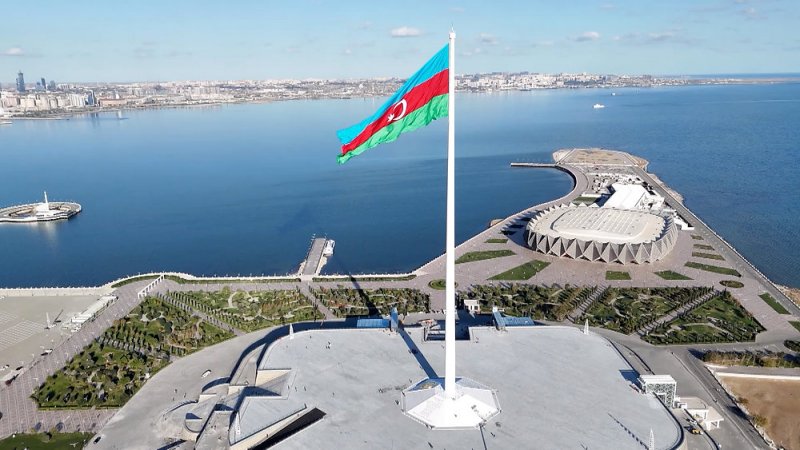
In pursuit of a similar anti-Pakistani policy, India strained its relations with Azerbaijan in the South Caucasus. Since independence, Azerbaijan had enjoyed a depth of political relations with Pakistan. Islamabad supported Azerbaijan’s territorial integrity and condemned Armenian occupation of the latter’s territory. Baku, in turn, had verbally supported the resolution of the Kashmir problem. This stance was also voiced by many other countries as the Kashmir problem was addressed in the language of the relevant United Nations resolutions.
Yet, on the economic front, Azerbaijan-India relations were good and stable – much higher than Azerbaijan-Pakistan. On the humanitarian and cultural front, the two countries enjoyed smooth interactions – from the flow of Indian tourists to Azerbaijan to Bollywood movies, which were culturally present in Azerbaijan since Soviet times.
After the Second Karabakh War in 2020, when Azerbaijan liberated its internationally recognized territories from Armenian occupation, New Delhi adopted a series of steps to strengthen India-Armenia relations – key among these decisions was the sale of modern weaponry to Yerevan.
The first-ever visit of the Indian External Affairs Minister to Armenia in October 2021 revealed the growing strategic dimension of this outreach. Minister Jaishankar spoke about Aryan ties and geopolitical necessity, and ended by promoting military ties. India sold advanced military systems, making Armenia its largest arms purchaser, with defense deals totaling over $2 billion between 2020 and 2025.
India’s calculation was to create a strong foothold in the neighborhood next to Azerbaijan and Turkey. Advantages were short-lived – Armenia proceeded with the normalization process with Azerbaijan and Turkey, and quite importantly these diplomatic efforts happened with the support of the United States. Azerbaijan, which previously had small trade with Pakistan, signed a landmark $4.6 billion defense contract with Pakistan for the purchase of JF-17C Block III multirole fighter jets, which, by the way, outperformed the Indian Air Force during the 2025 war with India.
India’s actions against Azerbaijan also extended to the diplomatic front, including attempts to block Azerbaijan’s accession to the Shanghai Cooperation Organization (SCO) and BRICS. However, these efforts achieved little, as New Delhi’s obstruction reportedly irritated China and several other member states. The Turkish Foreign Minister criticized India, saying “If India is going to be resentful about any country having good relations with Pakistan, there are many such countries.”
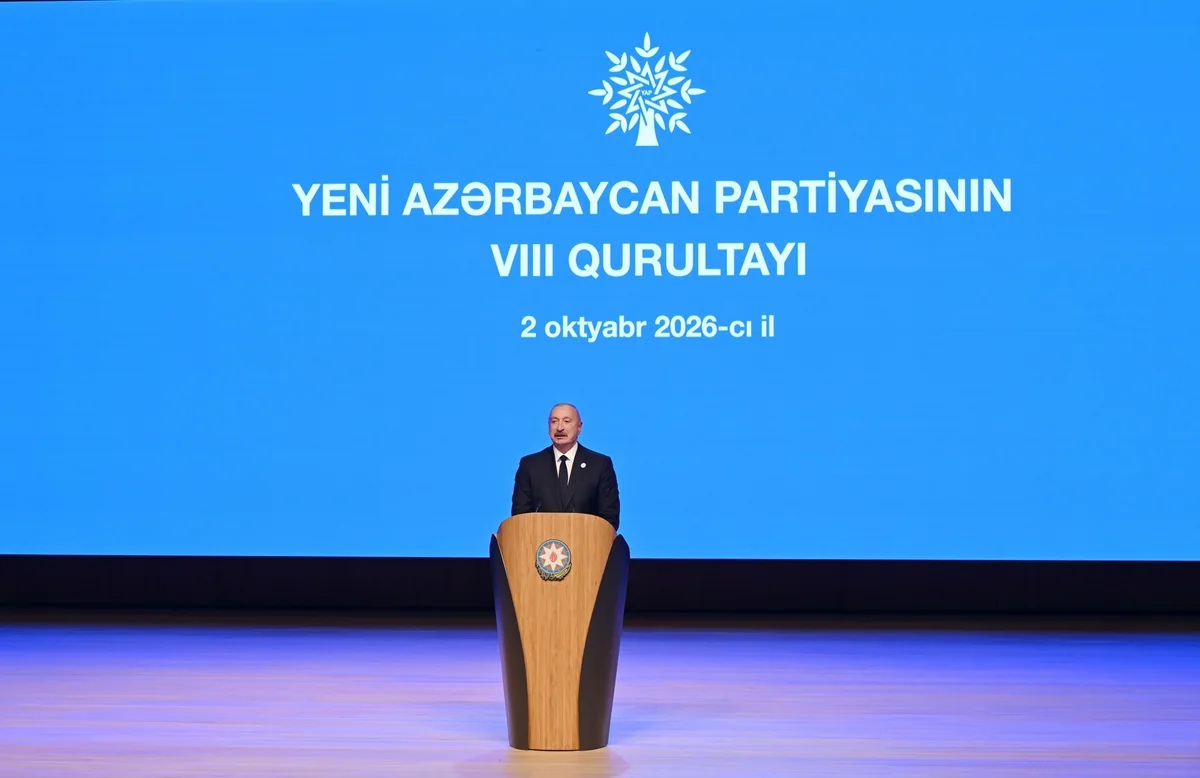
Azerbaijan has also found ways to respond. Most recently, Baku invited a group of Sikhs to discuss the situation of ethnic and religious minorities in India. A similar Baku initiative directed at France over the issue of New Caledonia was initially dismissed by Paris but later acquired greater significance as violence erupted in the territory in 2024. President Ilham Aliyev openly referred to this as a “boomerang effect,” arguing that it was a response to France’s support for separatism in Karabakh until 2023. Since then, Baku and Paris have agreed to engage in diplomatic talks to address their outstanding differences.
Azerbaijan and India had diplomatic consultations in April 2026. While, within diplomatic circles, some indications were made that New Delhi might rethink its relations with Azerbaijan, at the political level India maintains its previous negative posture.
Conclusion
As a founding member of the Non-Aligned Movement, India historically demonstrated considerable skill in balancing relations between competing great powers while also exhibiting its diplomatic repertoire. Today, however, India’s balanced foreign policy was replaced with a posture coming from overestimated economic power coupled with Hindu nationalism.
However, recent developments suggest that India’s foreign policy has encountered significant strategic setbacks. Efforts to expand its regional and global influence have, in several cases, produced unintended consequences, weakening New Delhi’s diplomatic leverage and complicating its relations with key regional actors. These challenges indicate the need for a reassessment of India’s foreign policy priorities and methods, particularly in the Middle East and the South Caucasus, where shifting geopolitical dynamics have exposed the limits of its current approach, and in its relations with Turkey and Azerbaijan, where increasingly confrontational policies have yielded limited strategic gains while narrowing opportunities for constructive engagement.