NORTHERN VECTOR THREATS AND AZERBAIJAN’S POST-WAR STRATEGIC RESILIENCE

The 44-day Patriotic War fundamentally recalibrated the power dynamics in the South Caucasus, redefining regional influence mechanisms. Particularly along the northern axis, the traditional architecture of geopolitical oversight has been significantly disrupted. Current threats are less about direct military confrontation and more about multi-layered, coordinated influence operations designed to shape political, economic, and informational environments….
Read more

Azerbaijan’s expanding diplomatic trajectory

The diplomatic activity of recent weeks outlines a strategic map of Azerbaijan’s foreign policy—its scale, tempo, and evolving priorities. The geography of engagement stretching from Baku to Munich, from Belgrade to Washington, demonstrates that Azerbaijan is no longer confined to a regional framework. It is positioning itself as a systemic actor operating between regional consolidation…

Read more

Azerbaijan–Serbia relations Strategic alignment beyond traditional diplomacy

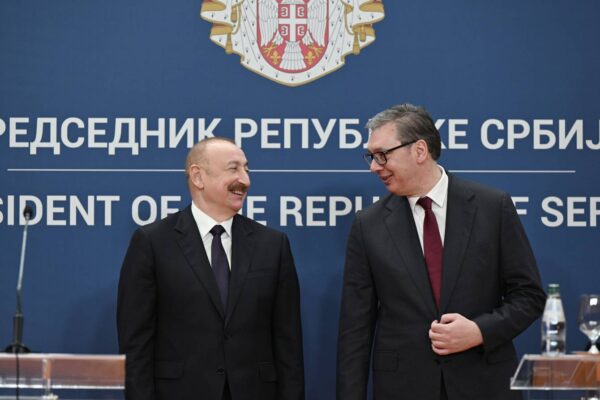
In the geopolitical landscape of Southeast Europe, the bilateral relationship between Azerbaijan and Serbia has evolved far beyond traditional diplomatic engagement, developing into a partnership with strategic depth. Recent statements by Azerbaijan’s President Ilham Aliyev during his February 15 visit to Belgrade underscore both the normative and practical foundations of this growing cooperation. Particularly, the…

Read more

Vice President Vance’s visit and the reframing of partnership in a changing geopolitical order

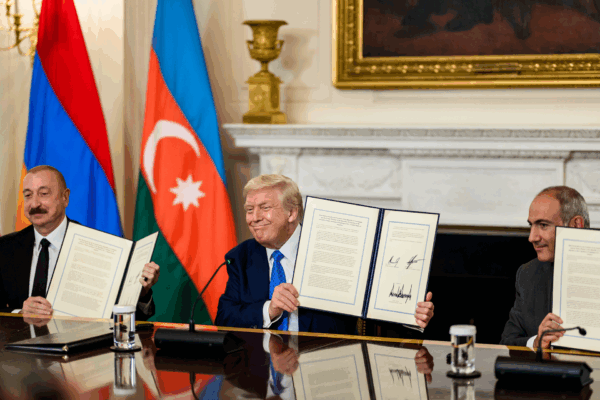
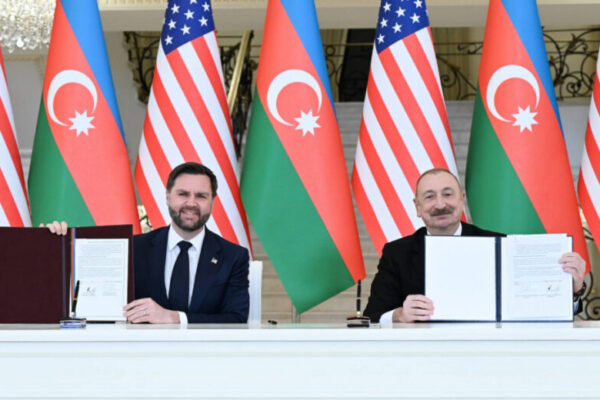
The joint press statements delivered by U.S. Vice President James David Vance and President Ilham Aliyev mark a qualitatively new phase in U.S.–Azerbaijan relations. Viewed through a political-analytical lens, these statements reveal not merely diplomatic goodwill, but the political coding of a strategic recalibration in Washington’s approach to the South Caucasus. Vance’s assertion that the…

Read more

AZERBAIJAN’S ENDURING SECURITY PRIORITIES IN A VOLATILE REGIONAL ENVIRONMENT

President Ilham Aliyev’s remarks in his interview with Euronews at the Davos Forum, where he expressed concern about internal instability in Iran, provide an important window into Azerbaijan’s evolving security doctrine. His emphasis on the triad of stability, predictability, and peace reflects a rational–realist understanding of security, grounded not in ideological posturing but in strategic risk management and regional…

Read more

THE WORLD AFTER DAVOS: POWER, FRAGMENTATION AND THE RETURN OF STRATEGIC COMPETITION

The Davos Forum has gradually evolved from an economic dialogue platform into an ideological laboratory where the future architecture of global power, security, and governance is openly negotiated. In the emerging post-liberal order, Davos debates increasingly reflect not optimism about integration, but anxiety about fragmentation, systemic rivalry, and the erosion of long-standing norms. What now…

Read more

TRIPP and the Armenia–U.S. strategic partnership

The recent meeting in Washington between Armenian Foreign Minister Ararat Mirzoyan and U.S. Secretary of State Marco Rubio, coupled with the official announcement of the implementation framework for the TRIPP initiative, signals the entry of the South Caucasus peace process into a qualitatively new phase. While previous stages were largely dominated by political declarations and…

Read more

AZERBAIJAN’S RISING STRATEGIC ROLE WITHIN THE D-8 PLATFORM

President Ilham Aliyev’s recent interview with local television channels offers an important analytical lens through which Azerbaijan’s evolving position in the international system can be assessed. Among the most significant elements of the interview is Azerbaijan’s accession to the D-8 Organization for Economic Cooperation, a development that reflects not merely a diplomatic achievement, but a…

Read more

THE REAL FACE OF THE 907TH AMENDMENT AND U.S.–AZERBAIJAN RELATIONS

President Ilham Aliyev’s recent interviews with domestic television channels provide a conceptual political analysis that unveils the structural logic and institutional character of U.S.–Azerbaijan relations. The President presents the 907th amendment not as an isolated episode or the product of individual relationships, but through the prism of international system mechanisms, the hierarchy of great power…

Read more

WASHINGTON’S SIGNAL AND STRATEGIC RESONANCE: A NEW PHASE IN AZERBAIJAN’S MULTI-VECTOR PARTNERSHIP MODEL

President Ilham Aliyev’s recent interview with local television channels provides a strategic diagnosis of Azerbaijan’s evolving position within the international system. The core message extends beyond bilateral relations with the United States and highlights the broader political resonance this relationship generates within the European political space. What emerges is a clear illustration of how influence,…

Read more