Georgia’s strategic ambiguity in a recalibrating South Caucasus

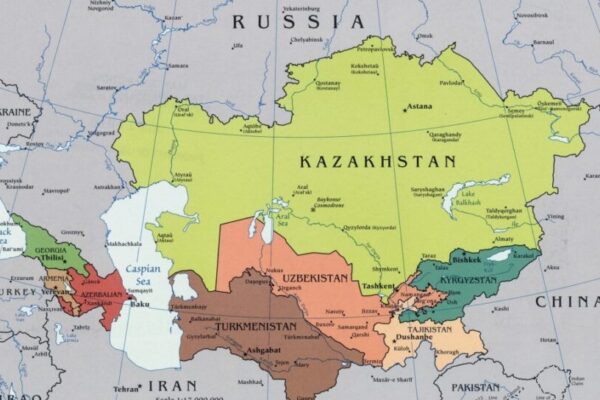
The South Caucasus is entering a phase of geopolitical recalibration that is both overdue and transformative. For more than three decades, the region was locked in a structural paralysis shaped primarily by the Armenia-Azerbaijan conflict. The Karabakh conflict created a logic of fragmentation that dictated political behavior: Armenia’s reliance on Russia hardened, Azerbaijan’s access to…

Read more

Rusif Huseynov participates in Peace Bridge Initiative meeting with Azerbaijani NGOs

On 13 January 2025, Topchubashov Center Director Rusif Huseynov participated in the meeting of the Peace Bridge Initiative, a direct communication platform bringing together representatives of Azerbaijani and Armenian civil society. The meeting was attended by members of the initiative and representatives of Azerbaijani non-governmental organizations (NGOs), who discussed the activities of the Peace Bridge…

Read more

Restraint without withdrawal: Iran’s evolving approach to forward defense

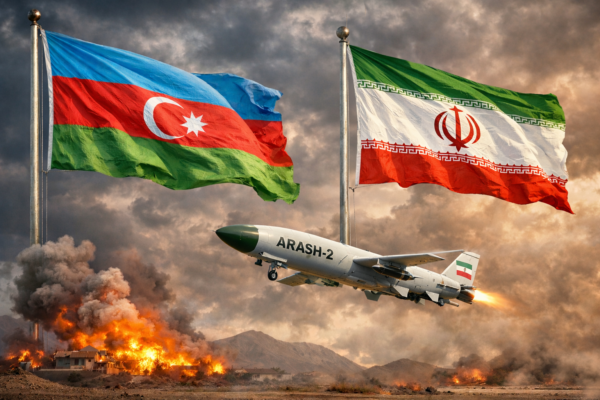
Iran’s humiliating military setbacks during the twelve-day war, compounded by deepening economic strain under the renewed maximum-pressure campaign, have forced an internal reckoning in Tehran over the country’s domestic social contract and its regional posture. The debate is no longer confined to how Iran should absorb external pressure, but whether the political and economic foundations…

Read more

Topchubashov Center co-hosts international conference in Hungary

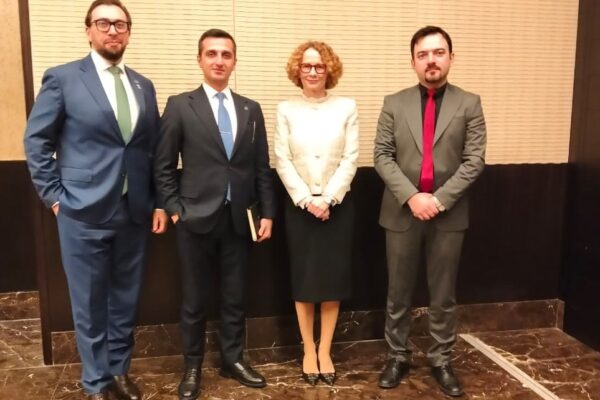
On 12 December 2025, Topchubashov Center, in partnership with the John Lukacs Institute for Strategy and Politics (JLI) at Ludovika University of Public Service (NKE), co-hosted an international conference entitled “Conflict and Coexistence in the Near East: Contemporary Dynamics.” The event was held at the John Lukacs Lounge of the Ludovika Side Building in Budapest….

Read more

Azerbaijani Foreign Policy in 2025: Key Highlights

The year 2025 marked a period of adjustment and consolidation in Azerbaijan’s foreign policy. From its immediate vicinity to neighboring regions, Baku approached its external environment not as a challenge to be reacted to, but as an emerging architecture to be proactively shaped in line with its vital interests. The formalisation of peace with Armenia…

Read more

Armenia-Azerbaijan Track 2: the ice is melting

Before the 2020 Karabakh War, the Armenia–Azerbaijan Track 2 diplomacy existed more as an aspiration than a lived reality. Dialogues were episodic, heavily mediated by third parties, geographically distant from the region, and largely disconnected from actual decision-making. Mutual visits were rare to the point of being unthinkable – exceptional and often sensationalized – and…

Read more

Mahammad Mehdiyev speaks at the ASIAC Conference

On 17 December 2025, Topchubashov Center’s Research Fellow Mahammad Mehdiyev delivered a presentation at the ASIAC Conference held in Venice. He presented his research titled “Cartographic Controversies: Google Maps and the Geopolitics of Place Names in Conflict Zones,” in which he examined how digital mapping platforms represent disputed borders and place names, and how these…

Read more

The Black Sea fault line: how sanctions and fragmentation are rewriting the region’s energy order?

As Western sanctions on Russia intensify, targeting not only the country’s financial apparatus but also major companies and energy champions such as LukOil, Rosneft, and Gazprom Neft, the Black Sea has become the most dynamic fault line in Europe’s reconfigured energy landscape. The accelerated withdrawal of these Russian companies from the region is not simply…

Read more

Rusif Huseynov speaks at HIIA panel session

On 10 December 2025, Topchubashov Center Director Rusif Huseynov joined a panel session entitled “The Armenian-Azerbaijan peace process – From frozen conflict to hot peace.” Hosted at the Hungarian Institute of International Affairs, the panel also featured Armenian, Georgian, and Hungarian experts. In his remarks, Rusif Huseynov assessed the peace process and connectivity between Armenia…

Read more