
The Davos Forum has gradually evolved from an economic dialogue platform into an ideological laboratory where the future architecture of global power, security, and governance is openly negotiated. In the emerging post-liberal order, Davos debates increasingly reflect not optimism about integration, but anxiety about fragmentation, systemic rivalry, and the erosion of long-standing norms. What now dominates the global conversation is not growth or globalization, but resilience, security, and strategic autonomy.
Recent discussions in Davos reveal a clear structural shift: global stability is no longer taken for granted, regional conflicts are acquiring systemic implications, and major powers are reverting to increasingly explicit hegemonic behavior. The liberal international order that once claimed universality is visibly losing its institutional and normative foundations. Multilateral mechanisms struggle to deliver effective decision-making, international law is applied selectively, and economic interdependence no longer guarantees political restraint. The crisis of global governance has thus become a crisis of legitimacy itself.
This transformation is particularly visible in the strategic evolution of the United States. In the post–Cold War era, Washington sought to legitimize its dominance through normative leadership — promoting democratic governance, open markets, and institutional multilateralism. Over the past decade, however, this approach has given way to a more pragmatic, interest-driven and power-centered strategy. Strategic competition, technological supremacy, supply-chain security, and geopolitical containment now shape American foreign policy more than universal norms.
At the same time, China and Russia have actively exploited the structural gaps created by the weakening of liberal hegemony. China expands its influence through economic statecraft, infrastructure connectivity, and the export of technological standards, gradually shaping parallel ecosystems of dependency and influence. Russia, by contrast, relies more heavily on classical power politics, military leverage, and regional coercion to redesign its strategic environment. Together, these dynamics signal not the emergence of a stable multipolar order, but a fragmented system of overlapping power centers and contested spheres of influence.
Long perceived as a zone of chronic instability, the Middle East has undergone a functional transformation. Whereas conflicts were once primarily interpreted through local political, ethnic, and ideological lenses, the region has increasingly become a testing ground for great-power competition. It now functions as a strategic node where global energy security, maritime trade routes, and geopolitical influence intersect.
Rising security risks around the Red Sea and the Strait of Hormuz highlight the region’s centrality to the global economy. Any disruption in these corridors instantly reverberates through energy markets, insurance systems, and supply chains, generating inflationary pressures and systemic uncertainty far beyond the region itself. Security risks have therefore become embedded within economic decision-making at the global level.
Although the United States formally emphasizes a strategic pivot toward the Indo-Pacific, practical realities prevent a meaningful disengagement from the Middle East. Energy transit security, Israel’s strategic defense, and the containment of Iran remain structural priorities for Washington. Iran, in turn, has developed a sophisticated asymmetric influence architecture, relying on proxy networks, hybrid deterrence, and maritime pressure points to offset conventional power asymmetries.
The most dangerous dimension of this rivalry lies in the absence of effective regional security governance mechanisms. Without institutionalized conflict management platforms, escalation dynamics are driven by situational calculations and localized actors rather than strategic coordination, increasing the probability of unintended systemic crises.
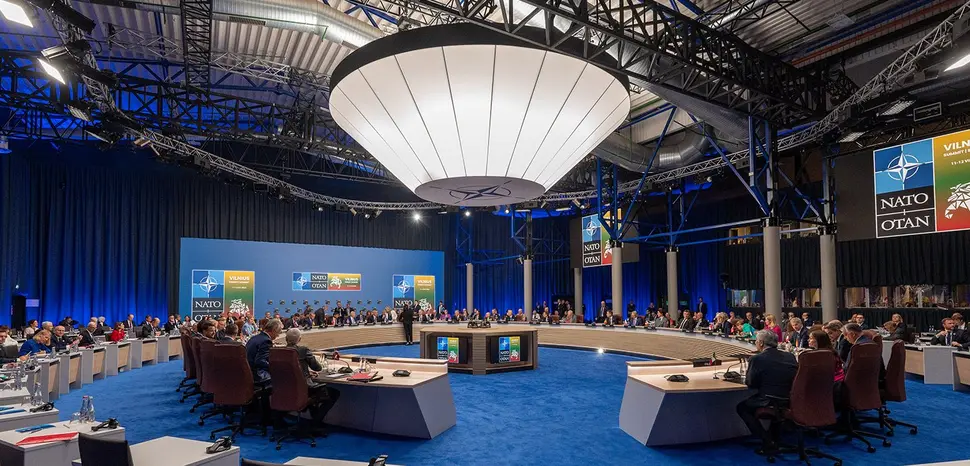
The war in Ukraine represents not merely a regional conflict but a structural rupture in Europe’s post-1945 security architecture. The assumption that large-scale war had been permanently excluded from the European continent has collapsed. NATO’s eastward expansion, initially framed as a stabilizing mechanism, deepened Russia’s security dilemma and accelerated mutual distrust. The militarization of Eastern Europe has transformed former buffer zones into direct confrontation spaces.
Europe’s rapid rearmament and expanding defense expenditures signal the erosion of the EU’s long-standing identity as a predominantly normative power. Legal frameworks, institutional instruments, and soft power mechanisms have proven insufficient under conditions of existential security threat. Classical power politics has returned as the dominant logic.
For the United States, the war has reinforced strategic leadership over Europe and consolidated transatlantic dependency. For Russia, despite significant costs, the conflict remains linked to a broader ambition of reshaping its strategic environment and challenging Western dominance. The central question now extends beyond Ukraine’s territorial integrity: it concerns whether Europe can emerge as an autonomous geopolitical actor or remain structurally embedded within the American security architecture.
The European Union’s long-standing ambition to achieve strategic autonomy has encountered its structural limits. Under real security pressure, European states instinctively return to NATO as the only credible provider of collective defense. Divergent threat perceptions among member states — from Russia in Eastern Europe to migration and Mediterranean instability in the South — undermine the formation of a unified defense identity.
As NATO’s dominance strengthens, Europe’s military planning becomes increasingly anchored within the transatlantic framework. The paradox is clear: the deeper Europe’s reliance on the United States for security, the narrower its capacity to act as an independent global actor. This dependency simultaneously deepens internal political fragmentation between states favoring closer alignment with Washington and those advocating strategic independence.
The result is a fragmented European identity — economically powerful, normatively ambitious, yet strategically constrained.
The institutional paralysis of the UN Security Council illustrates the broader crisis of global governance. The politicization of veto power, declining great-power consensus, and weakened enforcement mechanisms have undermined the credibility of collective security frameworks. As a result, flexible coalitions, regional mechanisms, and informal dialogue platforms have gained relevance.
The concept of a “Peace Council” emerges as an attempt to restore normative legitimacy through preventive diplomacy, early-warning mechanisms, and conflict de-escalation tools. However, in an international environment dominated by power politics, such initiatives face objective limitations. Strategic interests routinely override legal and normative considerations.
Nevertheless, dismissing these initiatives entirely would be analytically incomplete. While they may not directly reshape power balances, they preserve normative memory, sustain dialogue channels, and contribute to the long-term evolution of institutional thinking.
The resurgence of hegemonic competition is making the international system more volatile, more fragmented, and less predictable. In this environment, the central challenge for states is not merely security management, but strategic adaptability in a rapidly shifting global order. Davos no longer reflects confidence in global convergence — it mirrors a world learning once again how to operate under permanent strategic uncertainty.
Shabnam ZEYNALOVA
Expert of the Baku Political Scientists’ Club (Center)
PhD in Poltical Science, Associate Professor