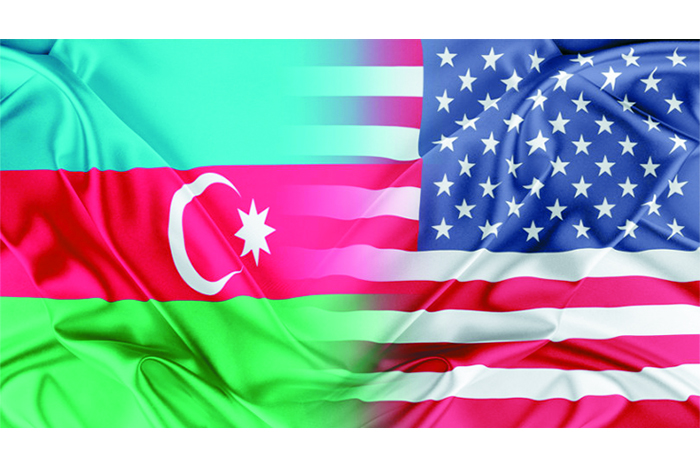
President Ilham Aliyev’s recent interview with local television channels provides a strategic diagnosis of Azerbaijan’s evolving position within the international system. The core message extends beyond bilateral relations with the United States and highlights the broader political resonance this relationship generates within the European political space. What emerges is a clear illustration of how influence, legitimacy, and strategic credibility are transmitted in contemporary international relations.
As President Aliyev noted, following the signing of the Memorandum of Understanding with President Trump on establishing a Strategic Working Group to prepare a Strategic Partnership Charter, several leading European states initiated proposals to develop strategic partnerships with Azerbaijan. This sequence reflects a well-established mechanism in diplomatic practice often described as “great power legitimization.” When a global power institutionalizes cooperation with a medium or regional state, it effectively upgrades that state’s credibility, reliability, and strategic visibility in the eyes of third parties. A political signal from Washington, therefore, does not remain confined to bilateral diplomacy; it radiates across allied networks and reshapes perception frameworks in European capitals.
Crucially, this resonance was not accidental or situational. Azerbaijan has systematically constructed a diversified partnership network over the past decade, signing nearly thirty strategic partnership declarations and agreements, including with ten European Union member states. This pattern reflects a deliberate transition from asymmetric dependency toward network diplomacy. Rather than anchoring its security and foreign policy orientation to a single power center, Baku distributes strategic risk and political leverage across multiple parallel partnerships. Such a configuration enhances maneuverability, reduces vulnerability to external pressure, and increases resilience within a volatile international environment.
The positive reception of Washington’s signal among European allies also confirms the enduring role of the United States as a reference power within the Western security architecture. While the global order is increasingly multipolar, transatlantic political alignment mechanisms remain influential in shaping strategic behavior. However, European interest in Azerbaijan cannot be reduced to political alignment alone. It is grounded in pragmatic assessments of Azerbaijan’s role in energy security, transportation corridors, connectivity initiatives, and regional stabilization. Azerbaijan is increasingly perceived not as a peripheral energy supplier but as a functional strategic node linking multiple geopolitical spaces.
From a politological perspective, this dynamic can be conceptualized as a process of “strategic trust transfer.” Political confidence extended by a major power is transmitted to secondary actors, triggering a chain reaction of engagement and institutionalization. Azerbaijan’s advantage lies in the fact that this trust is reinforced by tangible infrastructure investments, energy diplomacy, transit reliability, security cooperation, and demonstrated policy consistency.
President Aliyev’s message therefore carries a deeper strategic implication: Azerbaijan is actively shaping political agendas and partnership architectures. The resonance generated by Washington’s engagement in Europe reflects Azerbaijan’s gradual integration into Western strategic calculations as a credible and autonomous actor rather than a passive regional stakeholder. This evolution signals a qualitative shift in Azerbaijan’s international identity—from a reactive participant to a proactive system-shaping actor.
In this context, the emerging Strategic Partnership Charter represents a broader institutionalization of Azerbaijan’s multi-vector foreign policy at the transatlantic level. The partnership model is moving beyond regional balancing toward structural embedding within wider political and economic networks. This transformation strengthens Azerbaijan’s long-term strategic autonomy while simultaneously increasing its relevance in global connectivity and security debates.
Shabnam ZEYNALOVA
Expert of the Baku Political Scientists’ Club (Center)
PhD in Poltical Science, Associate Profesor