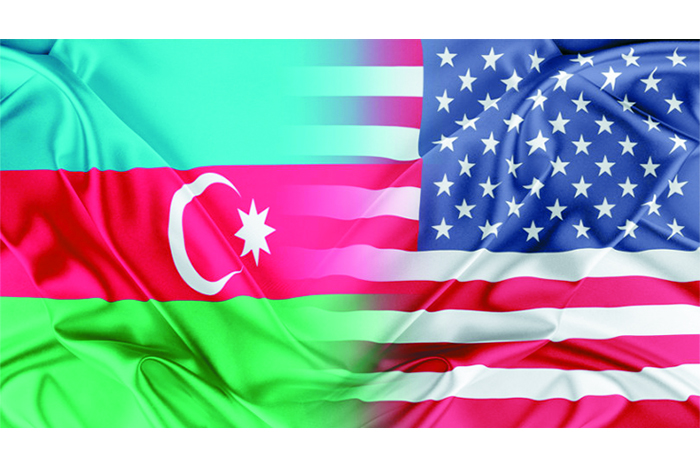
Azerbaijan–U.S. relations today transcend the binaries of historical friendship and past discord. They reflect the convergence of strategic rationality, shifting geopolitical configurations, and the maturation of Azerbaijan’s multi-vector diplomacy. President Ilham Aliyev’s remark that “Azerbaijan–U.S. relations entered a new phase following Donald Trump’s election” encapsulates a profound strategic transition — one rooted in the transformation of U.S. policy toward the South Caucasus and Azerbaijan’s consolidation as an indispensable regional actor.
Since the early 1990s, the trajectory of bilateral ties has been cyclical — oscillating between cooperation and cautious distance. During the formative years of Azerbaijan’s independence, Washington’s approach was dominated by the normative agenda of democratization and human rights. Yet, legislative measures such as Section 907 of the Freedom Support Act imposed an enduring asymmetry in the relationship. While publicly justified on humanitarian grounds, the amendment was in fact a manifestation of diaspora influence and early post-Cold War power politics. For Azerbaijan, this served as an instructive moment: that global politics operates not through ideals, but through interests.
By the mid-1990s, Azerbaijan had recalibrated its foreign policy. The 1994 “Contract of the Century” — engaging major U.S. energy corporations — restored Washington’s economic footprint in the Caspian basin and inaugurated a pragmatic framework for cooperation grounded in mutual benefit. Over time, Baku institutionalized a policy of “balanced realism”: maintaining cooperative ties with the West while cultivating strategic understanding with regional powers such as Russia, Türkiye, and Iran.
Donald Trump’s presidency marked another inflection point. His administration’s shift from ideological universalism to pragmatic realism created a conducive environment for recalibrating Azerbaijan–U.S. relations. The early phase of “America First” foreign policy emphasized disengagement from complex regions, but Trump’s second term introduced a new logic of strategic reciprocity — partnership rooted in clear interest alignment. Within this paradigm, Azerbaijan emerged not as a peripheral state but as a central stabilizing force in the South Caucasus.
The aftermath of the 2020 Nagorno-Karabakh war fundamentally altered the regional balance. The establishment of new transport and communication corridors elevated Azerbaijan’s geopolitical weight, while the United States increasingly adopted a role as facilitator rather than regulator. The Washington-mediated peace process between Azerbaijan and Armenia in 2024 symbolized this shift — a diplomacy based on equilibrium, not intervention.
Meanwhile, cooperation expanded beyond hydrocarbons. U.S. participation in Azerbaijan’s renewable energy projects, digital infrastructure, cybersecurity frameworks, and AI innovation reflected a modernized strategic partnership that fuses energy security with technological interdependence. The discourse of human rights and democracy, once central to U.S. engagement, has been pragmatically replaced by a focus on connectivity, energy diversification, and sustainable stability.
This evolution redefines agency. Azerbaijan is no longer an object of regional policy but a subject — a policy-shaper. Where once the question was “How significant is Azerbaijan to the United States?”, the reality now reads differently: the United States cannot sustain regional stability or energy security architecture in the South Caucasus without Azerbaijan’s participation.
Ultimately, the Azerbaijan–U.S. relationship of the 2020s stands as a case study in strategic pragmatism — a partnership forged not by ideological alignment but by the mutual recognition of necessity. It is a dynamic equilibrium of interest, capability, and respect, symbolizing a broader shift in international relations toward realist, interest-based diplomacy in an increasingly multipolar world.
Shabnam Zeynalova,
Expert of the Baku Political Scientists’ Club (Center),
PhD in Political Science, Associate Professor