
Baku and Yerevan View Vance’s Visit as Expansion of U.S. Engagement

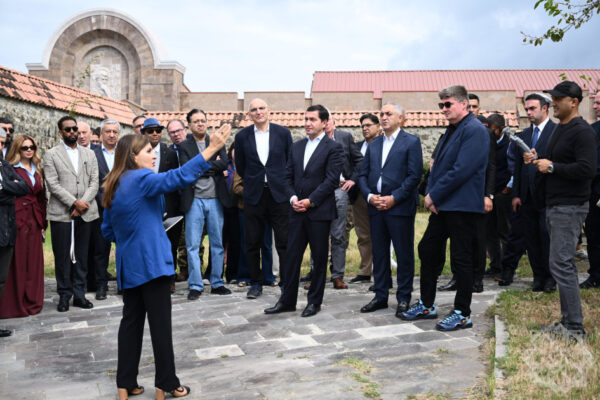
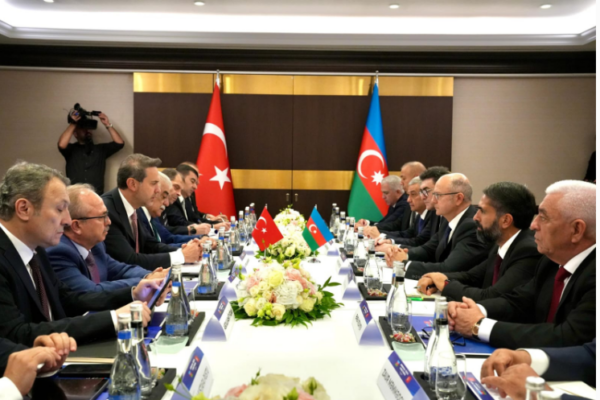
Executive Summary: U.S. Vice President J.D. Vance’s February 9–11 visit to Armenia and Azerbaijan marked Washington’s most consequential engagement in the South Caucasus since the August 2025 peace summit. In Yerevan, Vance advanced a landmark U.S.–Armenia nuclear cooperation deal, backed AI technology and defense sales, and promoted TRIPP connectivity. In Baku, he signed a Strategic…

Read more

From Shatterbelt To Strategic Pivot: U.S.-Azerbaijan Strategic Partnership As A Blueprint For Caucasian Peace – OpEd

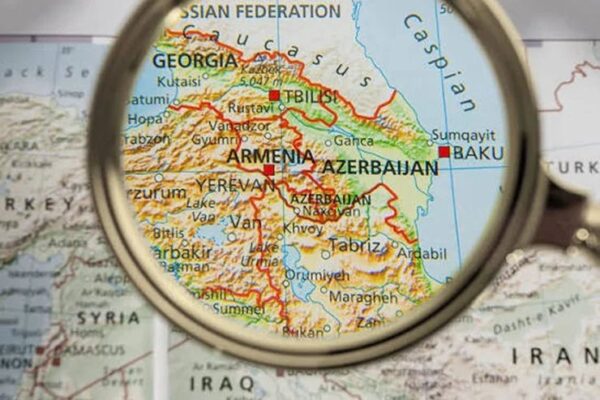
Situated at the crossroads of civilizations, cultures, and major transportation corridors stretching from east to west and north to south, and endowed with significant natural resources, the South Caucasus has historically occupied a central position in the geopolitical calculations of both regional and global powers. It is therefore no coincidence that American scholar Saul Bernard…

Read more

Measuring Strategic Pressure and Global Energy Risks in the Strait of Hormuz in 2026

The Strait of Hormuz returned to the center of global strategic risk calculations following the launch of the “Smart Control of the Strait of Hormuz” exercise on February 16, 2026. During the drill, the commander of the Islamic Revolutionary Guard Corps Navy publicly stated that Iranian forces could close the waterway “upon orders from the…

Read more

EU-Türkiye relations: In urgent need of renewal

The relationship between Türkiye and the European Union is facing a critical juncture. For many years, the sides benefitted from unique economic arrangements which brought them closer, most notably through the Customs Union established between them in 1995. However, despite generating numerous advantages, the relationship is widely acknowledged not to have maximized its full potential, writes Huseyn…

Read more

Zangezur Energy Corridor Enhancing Regional Energy Connectivity

Executive Summary: On January 29, AzerEnerji began construction of the Zangezur Energy Corridor, which aims to integrate Azerbaijan’s Nakhchivan Autonomous Region exclave into Azerbaijan’s national energy grid via the Trump Route for International Peace and Prosperity (TRIPP), also known as the Zangezur Corridor. The energy corridor’s goal is to enhance Azerbaijan’s domestic energy security while…

Read more

EU study highlights Azerbaijan’s strategic importance in the energy sector

Developments in Azerbaijan’s energy sector throughout 2025 and early 2026 closely align with this assessment, reinforcing the country’s role not only as a stabilising gas supplier but also as an emerging hub for electricity transit and system balancing across multiple corridors. From the EU’s perspective, diversification remains the cornerstone of energy security. Despite the bloc’s…

Read more

Opinion: After the visit of US Vice President JD Vance, the South Caucasus is being rewired

U.S. Vice President J.D. Vance’s February 9–11 visit to Armenia and Azerbaijan marked a structural turning point in the South Caucasus. Unlike previous high-level engagements of the United States that generated rhetorical alignment but limited follow-through, this visit embedded the region into long-term American economic, technological, and strategic frameworks. Taking place on the heels of…

Read more

Azerbaijan’s expanding diplomatic trajectory

The diplomatic activity of recent weeks outlines a strategic map of Azerbaijan’s foreign policy—its scale, tempo, and evolving priorities. The geography of engagement stretching from Baku to Munich, from Belgrade to Washington, demonstrates that Azerbaijan is no longer confined to a regional framework. It is positioning itself as a systemic actor operating between regional consolidation…

Read more

Azerbaijan–Serbia relations Strategic alignment beyond traditional diplomacy

In the geopolitical landscape of Southeast Europe, the bilateral relationship between Azerbaijan and Serbia has evolved far beyond traditional diplomatic engagement, developing into a partnership with strategic depth. Recent statements by Azerbaijan’s President Ilham Aliyev during his February 15 visit to Belgrade underscore both the normative and practical foundations of this growing cooperation. Particularly, the…

Read more

From Munich to Belgrade: mapping Baku’s strategic shift

 In February 2026, Azerbaijan’s foreign policy doctrine entered a new phase marked by proactive, results-driven diplomacy. President Ilham Aliyev’s participation in the Munich Security Conference on 13–15 February, followed immediately by official engagements in Belgrade on 15 February, forms a single strategic trajectory that consolidates Baku’s position on the Eurasian geopolitical map as a middle…

Read more