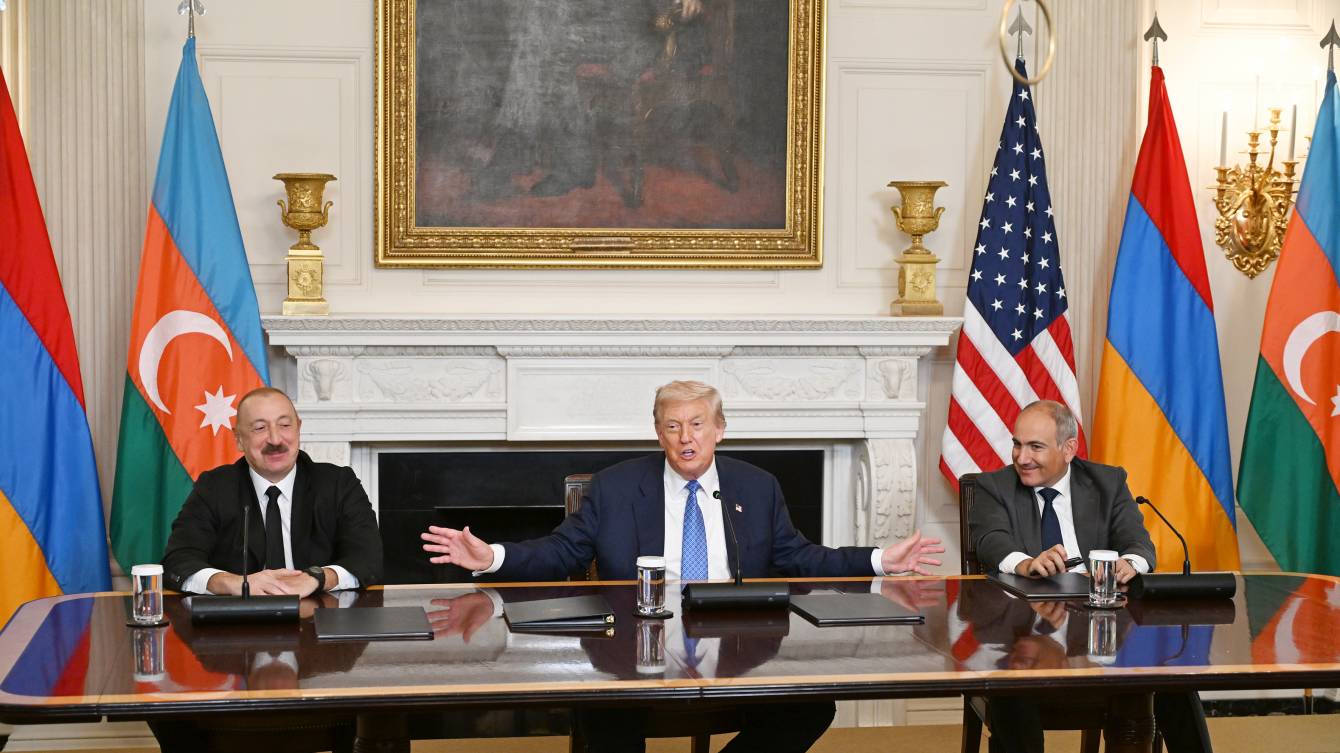
The Washington Declaration of August 2025 marks a turning point for the South Caucasus, unlocking unprecedented economic opportunities through peace, open borders, and the TRIPP corridor. Enhanced trade, investment, and energy cooperation promise regional integration, job creation, and sustainable growth, positioning Azerbaijan and Armenia as key hubs in global value chains.
The historic Washington Declaration of August 8, 2025 represents a transformative moment not only for regional stability but for the economic prosperity of the entire South Caucasus region. The establishment of sustainable peace between these two nations unlocks unprecedented economic opportunities that extend far beyond the immediate benefits of ending hostilities, creating a foundation for long-term economic integration, infrastructure development, and regional cooperation that could serve as a model for conflict resolution worldwide. The economic dividends of peace are multifaceted, encompassing direct benefits from increased foreign investment, enhanced trade relationships, and the opening of previously closed borders, as well as indirect benefits from improved regional stability, and the ability to redirect resources from defense to productive economic activities.
The opening of borders and normalization of relations creates unprecedented opportunities for bilateral trade, which had been virtually non-existent during the conflict. The restoration of direct trade links eliminates the need for costly and time-consuming transit through third countries, reducing transaction costs and improving the competitiveness of products from both nations in regional and international markets, representing a significant boost to both economies and creating thousands of jobs in trade-related sectors including logistics, transportation, customs services, and cross-border commerce.
The prolonged conflict and political tensions between Armenia and Azerbaijan severely constrained foreign direct investment (FDI) in the South Caucasus, leading to volatile and declining flows. Azerbaijan has already demonstrated strong FDI performance in early 2025, attracting approximately $1.5 billion in foreign investment, and this trend is likely to accelerate as investors gain confidence in the durability of the peace agreement and the opportunities created by regional economic integration. For Armenia, which has historically struggled to attract significant FDI due to its closed borders and limited market access, the peace agreement opens entirely new possibilities for foreign investment in manufacturing, services, technology, and infrastructure sectors. The reopening of transport corridors, including the “Zangezur Corridor,” could link Armenia to wider markets and stimulate cross-border economic cooperation. International companies that previously viewed the region as too risky due to ongoing conflict are now reconsidering their investment strategies, with many expressing interests in establishing operations that can serve both markets and take advantage of the complementary strengths of each economy.
The establishment of the Zangezur Corridor, now formally designated as the Trump Route for International Peace and Prosperity (TRIPP), represents perhaps the most transformative long-term economic opportunity emerging from the peace agreement between Azerbaijan and Armenia. Strategically, this transport link not only reconnects mainland Azerbaijan with its territory Nakhchivan but also integrates both countries into the broader Middle Corridor, an increasingly vital trade artery bridging Europe and Asia. In doing so, the South Caucasus is positioned to evolve into a critical hub within international logistics networks, linking markets in Central Asia, the Middle East, and Europe through efficient and diversified transport channels that bypass traditional routes via Russia or congested maritime passages.
The economic significance of TRIPP lies primarily in its role as a backbone of the Middle Corridor. According to detailed World Bank forecasts, based on extensive modeling of trade flows and infrastructure capacities, freight volumes moving through the corridor are projected to surge from the current 19 million tons to approximately 57 million tons by 2030. This would represent a threefold increase within less than a decade. Even more importantly, the modernization of transport infrastructure along the corridor, including the Zangezur section, is expected to cut transportation times on key East–West routes by as much as 50%. Such improvements are not merely incremental, they constitute a qualitative leap in the efficiency of logistics operations, reducing international business costs by an estimated 15–20%. These reductions in transport and logistics expenses will directly enhance the competitiveness of goods produced in and transiting through the region, thereby increasing its attractiveness as a preferred route for global supply chains.
The broader economic impact extends far beyond transit revenues. The TRIPP Corridor is expected to generate tens of thousands of jobs in transportation, logistics, warehousing, and auxiliary services. The development of modern logistics centers, dry ports, and special economic zones along the route will attract both regional and international businesses seeking to optimize their supply chains. These facilities will not merely serve as transit nodes but as multifunctional hubs for value-added activities such as processing, packaging, light assembly, and distribution. By anchoring such activities, the corridor will play a pivotal role in stimulating industrial diversification, fostering innovation, and integrating the South Caucasus into higher segments of global value chains.
The TRIPP is rapidly emerging as a transformative artery in the South Caucasus, not only for trade and logistics but also for the region’s energy security and long-term sustainability. Azerbaijan enters this new era from a position of strength. Energy transit has long been one of its strategic advantages, and Europe’s surging demand for non-Russian gas reinforces Baku’s role as a critical supplier. Under its 2022 agreement with the European Union, Azerbaijan committed to doubling gas exports to Europe by 2027, reaching 20 billion cubic meters annually, up from 12 billion in 2023. In the first four months of 2025, Azerbaijan exported approximately 4 billion cubic meters of gas to Europe, including 3.1 billion cubic meters to Türkiye and 0.9 billion cubic meters to Georgia, indicating significant progress toward its target. Moreover, the Southern Gas Corridor and TANAP pipeline remain essential routes, facilitating exports while expanding Azerbaijan’s energy infrastructure and geopolitical influence. Thus, Azerbaijan’s strategic role as a reliable energy supplier and transit country to Europe is expected to increase, supported by new transit routes including the TRIPP, enhancing connectivity and reinforcing its role in the EU’s energy diversification strategy.
For Armenia, which has long struggled with an acute energy deficit, TRIPP offers unprecedented opportunities. The country has almost no domestic oil or natural gas reserves and remains heavily dependent on costly imports from Russia, Iran, Georgia, and the EU. Such a structure leaves Armenia’s energy system exposed to external shocks and geopolitical risks. The opening of the TRIPP corridor creates the first realistic alternative – access to Caspian gas and oil resources through Azerbaijan’s extensive pipeline network and broader connections across the Middle Corridor. The integration of Armenia into the Middle Corridor through TRIPP could significantly enhance the region’s capacity to deliver Caspian energy westward, cutting transportation costs for major international companies by an estimated 10–15%. This diversification could not only lower costs but also dramatically reduce Armenia’s dependence on a single supplier.
Yet both countries recognize that fossil fuel resources are finite. Azerbaijan, in particular, is preparing for the post-oil era as its reserves gradually decline. The country has set ambitious plans to increase the share of renewable energy in its electricity generation to 30% by 2030, aiming to diversify its energy system and reduce greenhouse gas emissions by 40% by 2050. Key sectors for green energy development include wind, solar, and hydropower, with projects underway in partnership with international developers such as ACWA Power and Masdar. Azerbaijan’s strategic initiatives include building large-scale wind and solar power plants, targeting more than 8 GW of renewable capacity by 2030, and contributing to a trans-Caspian green energy corridor aimed at exporting renewable electricity to European markets. Supporting legislation, institutional reforms, and international cooperation underpin these efforts, positioning Azerbaijan as a regional leader in renewable energy and climate diplomacy for the post-oil era.
For Armenia, the energy transition also presents a historic opportunity. Though dependent on imports for hydrocarbons, the country has a strong domestic foundation in renewable energy, particularly hydropower. Hydroelectric plants along the Hrazdan and Vorotan rivers already generate 19% of the country’s total electricity output, accounting for nearly 68% of renewable production. Armenia’s largest hydropower facility, the Argel HPP within the Sevan-Hrazdan cascade, together with the Razdan Thermal Power Plant and a growing portfolio of solar installations, offers the basis for a diversified energy sector. With the TRIPP corridor providing reliable export routes, Armenia could evolve into a supplier of clean energy to regional and European markets. Exporting electricity generated from hydro and solar resources would not only reduce its trade deficit but also create a stable and profitable source of foreign currency revenues, stimulating further investment in renewable capacity.
Overall, the long-term economic vision enabled by the peace agreement extends to the possibility of the South Caucasus region emerging as a major economic hub connecting Europe, Asia, and the Middle East, with Azerbaijan and Armenia serving as key anchor points in this regional economic integration. The strategic geographic location of both countries, combined with their improving infrastructure and growing economic capabilities, positions them to play increasingly important roles in international trade networks and global value chains. The success of regional economic integration could serve as a model for other post-conflict regions worldwide, demonstrating the transformative power of peace dividends and economic cooperation in building lasting stability and prosperity. As both countries continue to implement the economic aspects of their peace agreement, they are likely to discover additional opportunities for cooperation and mutual benefit that will continue to strengthen the economic foundations of their peaceful relationship for generations to come.