Time to dissolve: Why the Minsk Group hinders Azerbaijan-Armenia peace process

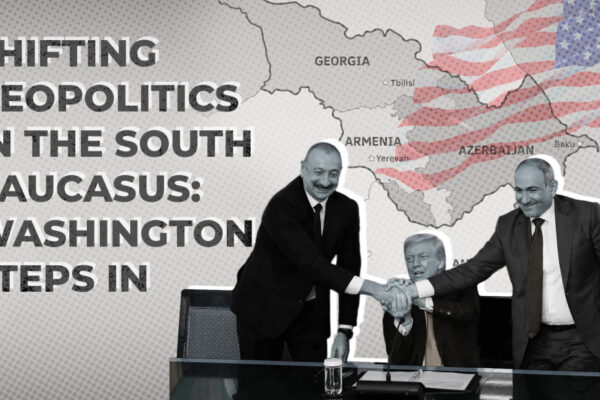
It is important to emphasize that the OSCE Minsk Group, established in 1992 under the auspices of the OSCE, was intended to assist with the peaceful resolution of the Karabakh conflict. Its co-chairs were the United States, France, and Russia. However, over the course of three decades, the group failed to achieve any tangible results that would…

Read more

Key Aspects Of Azerbaijan’s Independent And National Interest-Based Foreign Policy – OpEd

After restoring its state independence in 1991, the Republic of Azerbaijan entered the international system as a new, sovereign actor. One of the primary objectives during the early years of independence was to formulate an independent, flexible foreign policy strategy grounded in national interests. Given Azerbaijan’s location in a geopolitically complex region, achieving success in…

Read more

Towards A New Chapter In The Relationship Between Azerbaijan And The European Union – OpEd

On April 25th, the High Representative of the European Union for Foreign Affairs and Security Policy, Kaja Kallas, paid a visit to Baku.  During her diplomatic engagement, Ms. Kallas conducted bilateral meetings with the President of the Republic of Azerbaijan, Ilham Aliyev, and subsequently engaged in discussions with the Minister of Foreign Affairs of Azerbaijan. The deliberations encompassed the extant state of…

Read more

Kazakhstan’s evolving military strategy: peacekeeping and autonomy as pillars of a middle power

Introduction Since gaining independence from the Soviet Union in 1991, Kazakhstan’s military posture has been defined by strategic dependency on Russia, especially in high politics involving security and defense. While Astana has exercised greater autonomy in economic and diplomatic domains, its military reliance on Moscow remained largely uncontested. However, the Russian invasion of Ukraine in…

Read more

The Global South and the New Information Architecture of the World

Against the backdrop of unprecedented geopolitical and economic transformations, the world is entering an era where the Global South is beginning to play a key role – as a bearer of alternative development models, values of mutual respect, and multipolar cooperation. However, the influence of the countries of the Global South in the international information…

Read more

Azerbaijan and China forge a deeper Eurasian axis

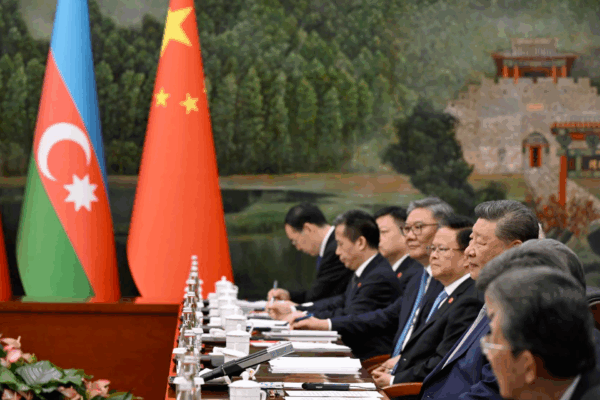
In the grand theater of Eurasian geopolitics, where tectonic plates of influence constantly shift, the image of Chinese President Xi Jinping and Azerbaijani President Ilham Aliyev standing side-by-side in Beijing’s Great Hall of the People on April 23, 2025, holds particular resonance. Their signing of the “Joint Statement on the Establishment of a Comprehensive Strategic…

Read more

Azerbaijan-China Relations: Formation and Perspectives

Almost 34 years have passed since the establishment of diplomatic relations between Azerbaijan and China. The recognition of Azerbaijan’s independence by the People’s Republic of China in December 1991 and the establishment of bilateral diplomatic relations in April 1992 marked a new phase in Azerbaijan-China relations. In 1992, the Embassy of the People’s Republic of…

Read more

IDD’ s Baku Dialogues Winter 2024–2025 Edition: A Continued Resource for Policy Reflection

The Institute for Development and Diplomacy (IDD) at ADA University offers perspectives on diplomacy, regional affairs, and global strategy. through its quarterly policy journal, the Baku Dialogues. The latest, Winter 2024–2025 edition of Baku Dialogues, brings together timely commentary on COP29, the evolving nature of diplomatic training, and Azerbaijan’s foreign policy thinking alongside contributions from…

Read more