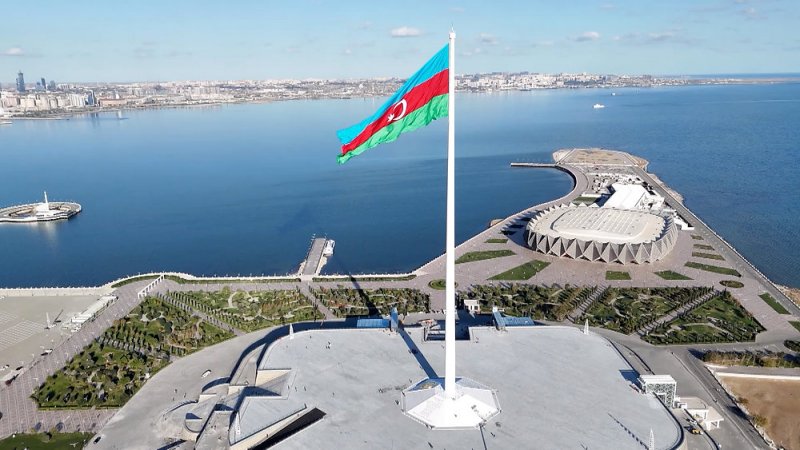
Situated at the crossroads of civilizations, cultures, and major transportation corridors stretching from east to west and north to south, and endowed with significant natural resources, the South Caucasus has historically occupied a central position in the geopolitical calculations of both regional and global powers. It is therefore no coincidence that American scholar Saul Bernard Cohen, in “Geopolitics: The Geography of International Relations”, classified the region as a classic geopolitical “shatterbelt” which is a fragmented space at the intersection of Europe, Russia, the Middle East, and Central Asia, where external powers project influence while local states pursue strategic autonomy.
From a security studies perspective, Barry Buzan’s Regional Security Complex Theory provides additional insight. Buzan emphasizes that historically embedded patterns of amity and enmity among regional actors shape security dynamics more profoundly than external interventions alone. Viewed through this lens, the South Caucasus has long been characterized by entrenched conflicts rather than cooperative security.
Following the dissolution of the Soviet Union in 1991, the independence of Azerbaijan, Armenia, and Georgia created opportunities for regional integration and economic development. Yet these prospects were undermined by protracted instability. The Armenia-Azerbaijan conflict, as well as tensions within Georgia, reinforced the region’s reputation as part of what Zbigniew Brzezinski termed the “Eurasian Balkans” – a volatile geopolitical space marked by fragile statehood and competing external interests. For nearly three decades, the unresolved Armenia-Azerbaijan conflict, rooted in the occupation of Azerbaijani territories, remained the primary obstacle to sustainable peace.
A decisive shift occurred after Azerbaijan restored its territorial integrity and sovereignty. This development generated a new diplomatic context in which Baku positioned itself as the principal initiator of a comprehensive peace agenda. A further turning point emerged with the arrival of the Donald Trump administration in the U.S., which adopted a more pragmatic and strategically calibrated approach towards the South Caucasus. Rather than framing regional engagement through zero-sum logic, Washington pursued balanced relations with both Azerbaijan and Armenia, recognizing evolving geopolitical realities and emerging peace prospects.
Since that time the high-level diplomatic engagement intensified, culminating in the signing of the Washington Peace Declaration on August 8, 2025. The declaration provided for the initialing of a peace treaty between Azerbaijan and Armenia and endorsed the dissolution of the OSCE Minsk Group – an institutional remnant of the former conflict. Crucially, it also prioritized the restoration of regional connectivity, including the 42-kilometer Zangezur corridor, referred to as the TRIPP corridor (Trump Route for International Peace and Prosperity), linking Azerbaijan’s mainland with its exclave of Nakhchivan.
Beyond its bilateral significance, TRIPP constitutes a strategic component of the Middle Corridor connecting Central Asia with Europe. Connectivity in this sense transcends infrastructure; it functions as a mechanism of interdependence capable of reinforcing economic integration and political stabilization. It should be noted that the technical aspects of the TRIPP corridor were defined in the joint U.S.-Armenia statement of January 13, 2026, concerning its implementation framework. According to the document, Armenia entrusts the initial 49-year management of the corridor to the TRIPP Development Company, which will be established with U.S. participation. Under the terms of the agreement, the United States holds a 74 percent stake in the company, while Armenia holds 26 percent. The agreement further provides for a subsequent 50-year extension of the contract, at which point Armenia’s share in the company would increase to 49 percent.
The Washington Declaration, which formally brought an end to the long-standing conflict between Azerbaijan and Armenia and constitutes one of the foundational pillars of sustainable peace in the South Caucasus, also opened a new chapter in Azerbaijan-U.S. relations. In Washington, agreement was reached on establishing a strategic working group to prepare the Strategic Partnership Charter between Azerbaijan and the United States. At the same time, Donald Trump signed an executive order suspending Section 907, which prohibits U.S. assistance to Azerbaijan. It should be noted that this amendment, adopted by the U.S. Congress in 1992, banned U.S. government assistance to Azerbaijan through state channels. At that time, the adoption of such a decision against Azerbaijan which was in a state of war and had part of its territory under occupation was not positively received by Baku. Although this amendment had been suspended by U.S. presidents since 2002 in light of Azerbaijan’s support for U.S. counterterrorism operations in Afghanistan, it was reinstated by the Biden administration. In this regard, it is necessary to note that Section 907, in fact, does not correspond to the current spirit of U.S.-Azerbaijan relations and therefore, Baku hopes for its complete repeal by the U.S. Congress.
Since the Washington meeting, contacts between Azerbaijan and the United States have expanded at various levels, reciprocal visits by delegations in different domains have taken place, and intensive work has been carried out on preparing the Strategic Partnership Charter. The culmination of these processes can be identified as U.S. Vice President JD Vance’s visits to Armenia and Azerbaijan on February 9–11. During his visit to Armenia, agreements were signed in the fields of economics, defense, artificial intelligence and semiconductors, as well as civilian nuclear technologies.
Vice President JD Vance’s visit to Azerbaijan, in turn, was marked by several important developments. First and foremost, during the visit, the Strategic Partnership Charter, whose preparation had been agreed upon in August, was signed between the two countries. Encompassing regional connectivity, energy, trade, investments in artificial intelligence and digital infrastructure in Azerbaijan, as well as cooperation in military-technical and security spheres, this Charter formally elevated Azerbaijan-U.S. relations to the strategic level.
On the other hand, the Vice President once again emphasized the importance of the peace process between Azerbaijan and Armenia, noting that the Azerbaijan-U.S. partnership would further strengthen regional peace and prosperity. This once again demonstrates that the United States holds a firm position not only regarding its strategic and economic interests in the South Caucasus, but also in establishing sustainable peace in the region. Finally, as stated in the Strategic Partnership Charter, the United States recognizes Azerbaijan’s strategic importance in the South Caucasus and acknowledges that it constitutes a vital component of the Middle Corridor connecting Central Asia which is another geopolitically and geoeconomically important region for the United States with the West, which in turn indicates that relations between the two countries are likely to deepen further in the coming years.
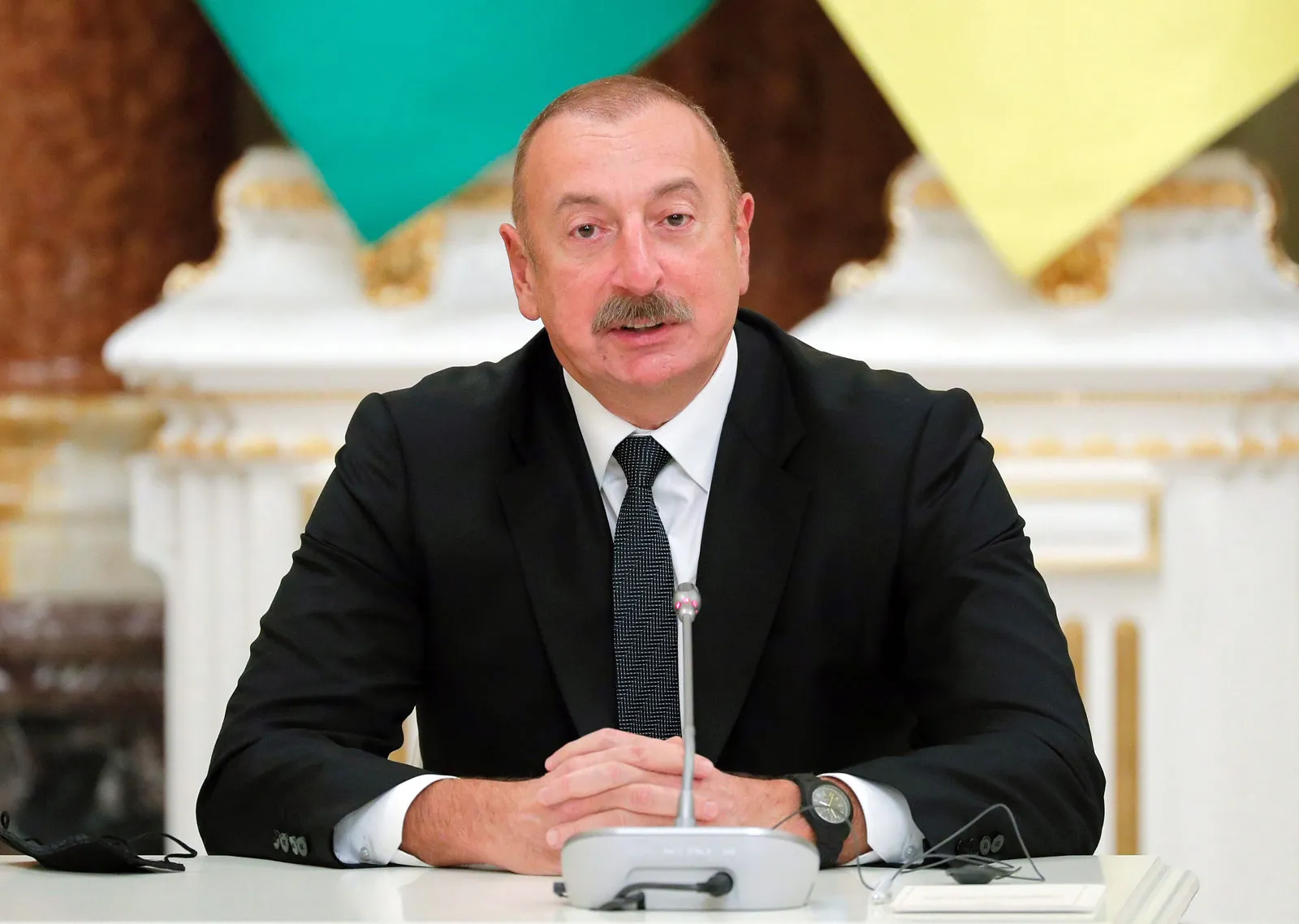
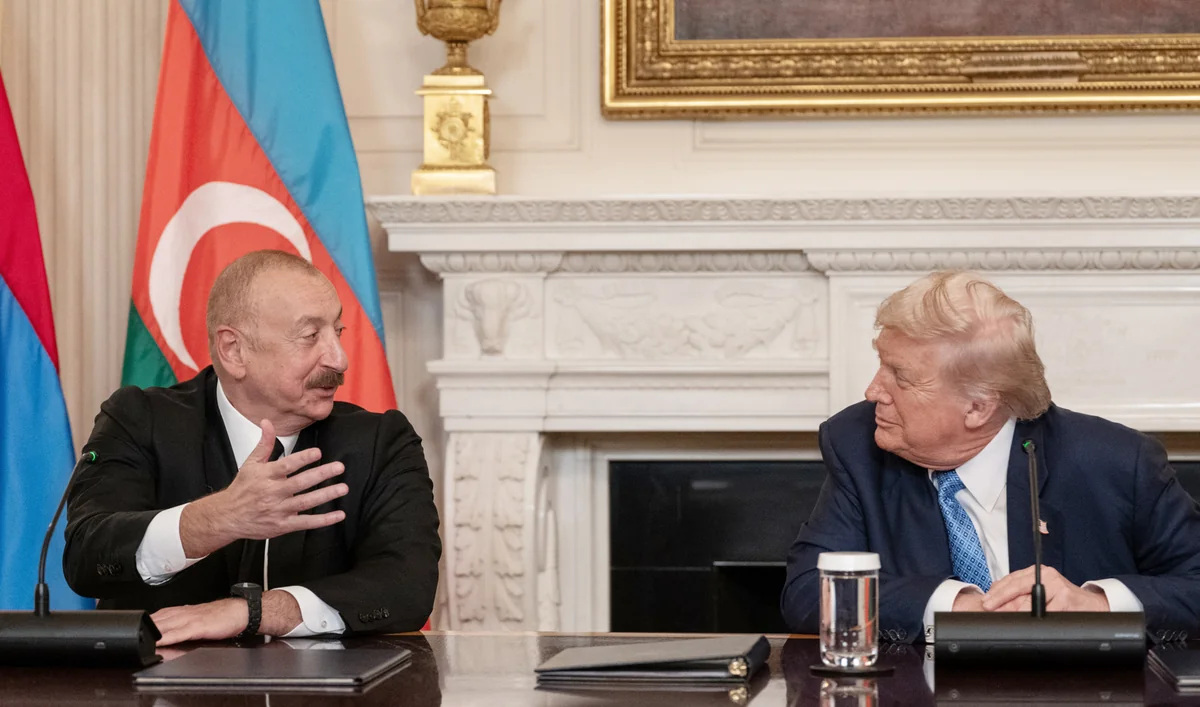
It should be noted that personal relations between the leaders of the two countries have also played a role in the current evolution of U.S.-Azerbaijan relations. Following the Washington summit held in August, U.S. President Donald Trump and Azerbaijani President Ilham Aliyev met at the World Economic Forum in Davos and subsequently participated in the founding ceremony of the Board of Peace proposed by the United States, with Azerbaijan thereby becoming one of the founding members of the Institution.
On February 19, at President Trump’s invitation, President Ilham Aliyev attended the inaugural meeting of the Board of Peace held in Washington, during which he also shook hands with Armenian Prime Minister Nikol Pashinyan, once again demonstrating before Trump and the entire world that the period of confrontation between the two countries had ended and that a state of peace now prevailed. During the meeting, Donald Trump addressed President Ilham Aliyev and Prime Minister Pashinyan, stating that he had ensured peace between the two countries and that he would never forget this achievement.
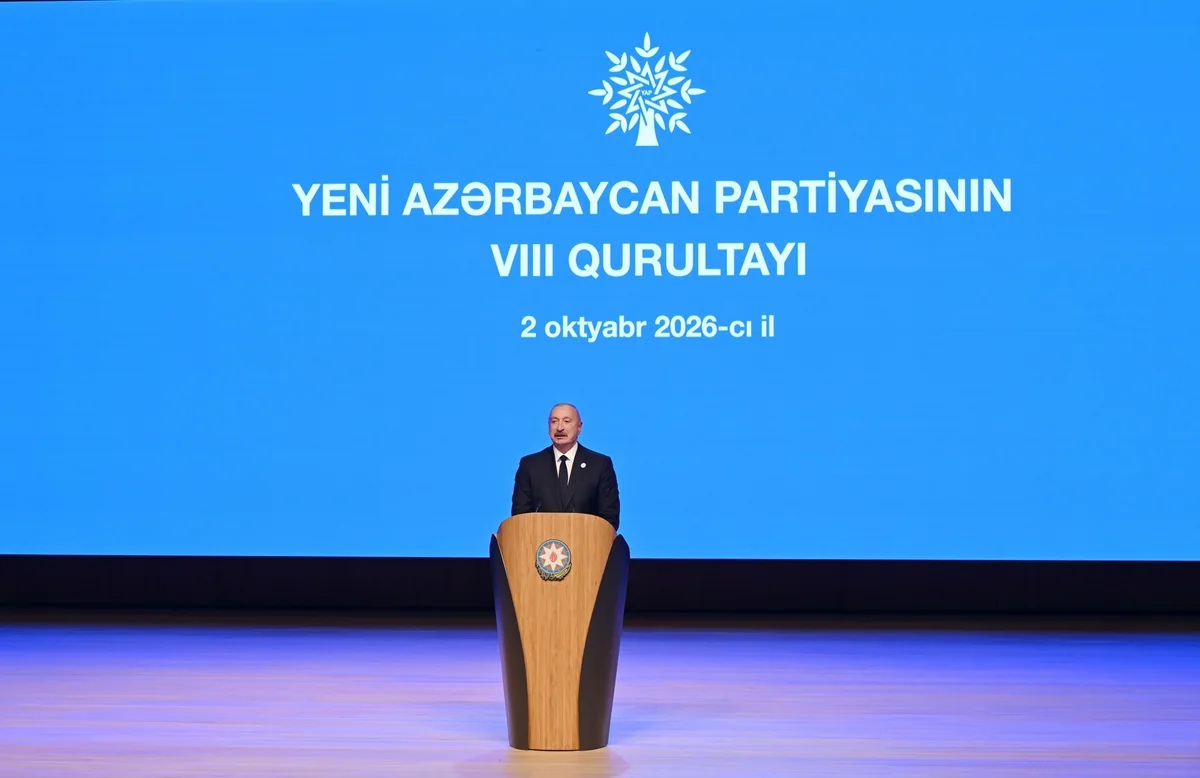
Taken as a whole, recent developments suggest that the current strategic level achieved in U.S.-Azerbaijan relations as a result of the Trump administration’s pragmatic policies has evolved into a reliable model for ensuring sustainable peace in the South Caucasus. It is precisely for this reason that, as President Ilham Aliyev has noted, Azerbaijan and Armenia have now been living in a state of peace for more than six months.
Moreover, Azerbaijan lifted last year its ban on the transit of cargo to Armenia, exported petroleum products to the country, and thus restored trade relations between Baku and Yerevan after many years. Beyond political and economic engagement, Track II meetings involving civil society representatives from both countries have also begun to take place, which is of significant importance for fostering an atmosphere of mutual trust. Admittedly, certain threats to sustainable peace persist. These include, first and foremost, the outcome of Armenia’s upcoming parliamentary elections in June, territorial claims against Azerbaijan embedded in Armenia’s constitution, as well as the geopolitical ambitions of some regional actors, particularly, Russia which seems dissatisfied with the current situation.
Nevertheless, the political will and result-oriented actions of both states, combined with the support of the United States, Türkiye, and other countries interested in lasting peace, provide realistic grounds for further consolidating the present peace environment. If sustained, this trajectory has the potential to transform the South Caucasus from a historic shatterbelt into a corridor of connectivity linking Europe and Central Asia – a shift with consequences far beyond the region itself.