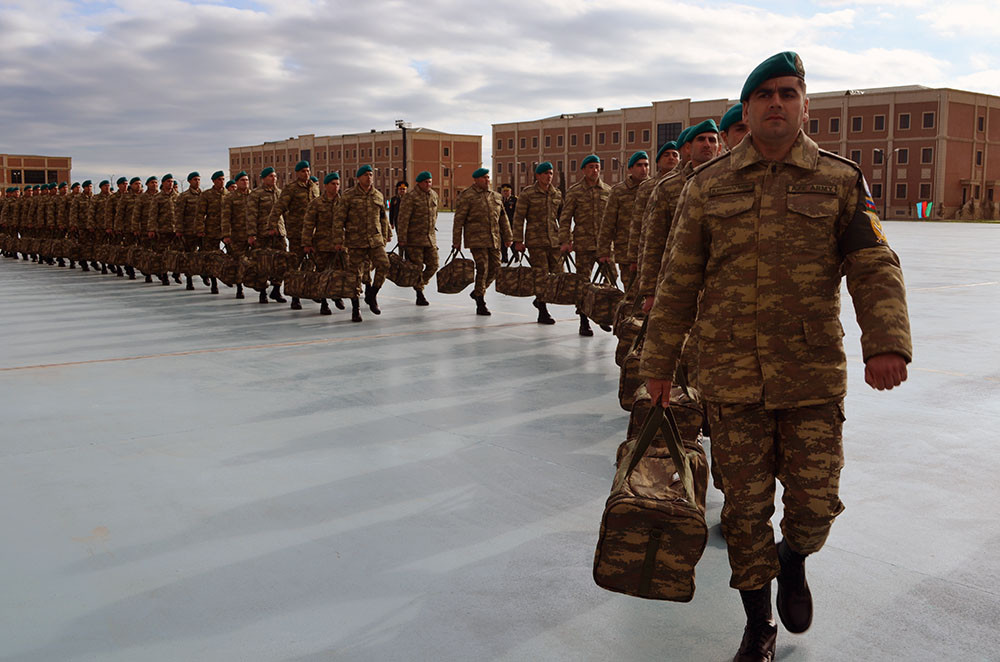
Since restoring its independence, one of the principal directions of the foreign and security policy of the Republic of Azerbaijan has been contributing to the strengthening of international peace and security. In this context, the participation of the Armed Forces of Azerbaijan in international peacekeeping operations has become an integral component of the country’s integration into the global security system. By joining operations conducted under the auspices of the United Nations (UN), NATO, and other international organizations, Azerbaijan has positioned itself as a responsible and reliable partner.
The Armed Forces of Azerbaijan have participated in the following major international peacekeeping operations:
1. Kosovo (1999-2008) – Azerbaijani peacekeeping units served within the framework of the NATO-led Kosovo Force (KFOR) operation.
2. Iraq (2003-2008) – Azerbaijani military personnel participated as part of the US-led coalition forces, primarily ensuring the protection of strategic facilities.
3. Afghanistan (2002-2021) – Azerbaijani troops carried out security and protection duties within the framework of NATO’s International Security Assistance Force (ISAF) and later the Resolute Support Mission.
Participation in these operations has served as a concrete demonstration of Azerbaijan’s commitment to international security initiatives.
The Kosovo Operation and the First Peacekeeping Experience
In 1999, a peacekeeping unit of the Armed Forces of Azerbaijan was deployed to Kosovo as part of the NATO-led Kosovo Force (KFOR). This marked the first substantial integration of the Azerbaijani Army into international peacekeeping activities.
The Azerbaijani contingent was primarily tasked with patrol duties, the protection of strategic facilities, and the maintenance of stability. This mission played a significant role in developing the capacity of Azerbaijani military personnel to operate effectively within a multinational military environment.
The Iraq Operation: A Stage of Strategic Partnership
Beginning in 2003, Azerbaijani military personnel commenced service in Iraq as part of coalition forces. Their primary responsibility was the protection of key infrastructure facilities, including the Al-Haditha water reservoir.
This operation represented a tangible contribution by Azerbaijan to international efforts to combat terrorism. At the same time, it contributed to the strengthening of strategic partnership relations between Azerbaijan and the United States.
The Afghanistan Mission: Long-Term and Systematic Engagement
The most extensive participation in Azerbaijan’s peacekeeping activities took place in Afghanistan within the framework of the International Security Assistance Force and subsequently the Resolute Support Mission.
The Azerbaijani contingent was involved in the protection of Kabul International Airport and other security-related tasks. During the withdrawal of NATO forces in 2021, Azerbaijani military personnel were among the last contingents to leave the country, which was widely regarded as an indicator of their high level of reliability and professionalism. In this regard, it is noteworthy that during his most recent visit to Azerbaijan, the Vice President of the United States, J.D. Vance, highly commended the fact that Azerbaijani peacekeepers were among the last to withdraw from Afghanistan.
The participation of Azerbaijan in peacekeeping operations is of considerable importance in terms of supporting international law and the principles of collective security. Azerbaijan has demonstrated its role not merely as a regional actor, but as a responsible partner at the global level in ensuring international security.
This participation has contributed in several key areas:
- Providing tangible military support for the stabilization of conflict zones;
- Joining international efforts to combat terrorism and radicalism;
- Strengthening multilateral security mechanisms.
Thus, Azerbaijan has positioned itself not as a “consumer” of international security, but as a “contributing” actor.
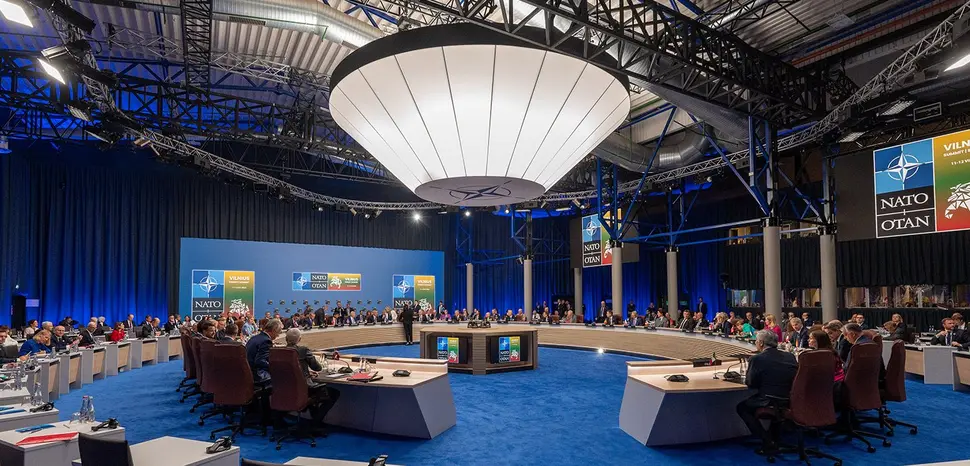
Participation in peacekeeping operations has also deepened Azerbaijan’s cooperation with international organizations, particularly by advancing partnership mechanisms with NATO. This process has facilitated an increase in the country’s political credibility, the formation of a reliable partner image, and the consolidation of its position within the international security architecture. Within the framework of Azerbaijan’s multi-vector foreign policy, peacekeeping activities have served as a practical platform for cooperation.
Moreover, participation in peacekeeping operations has had a significant impact on the transformation of the Armed Forces of Azerbaijan. Direct engagement with multinational operational environments, NATO procedures, command-and-control systems, and logistical support mechanisms has accelerated the institutional development of the military.
As a result of this experience:
- The professional training level of personnel has improved;
- Experience in operational planning in accordance with NATO standards has been acquired;
- The ability to operate in an English-speaking command environment has been developed;
- Combat readiness and tactical flexibility have increased.
This experience has played a crucial role in the subsequent modernization process of the Azerbaijani Armed Forces and in enhancing their operational capabilities.
In conclusion, the participation of the Azerbaijani Armed Forces in peacekeeping operations has constituted one of the key dimensions of the country’s integration into the international system as an independent state. Engagement in missions in Kosovo, Iraq, and Afghanistan has not only provided a tangible contribution to international peace and security, but has also strengthened Azerbaijan’s position as a reliable partner in global security initiatives. At the same time, these operations have been of strategic importance in terms of the professional development of the Armed Forces, their adaptation to international standards, and the enhancement of combat capability. Accordingly, peacekeeping activities function as a comprehensive mechanism within the security policy of the Republic of Azerbaijan, combining both external engagement and internal modernization dimensions.