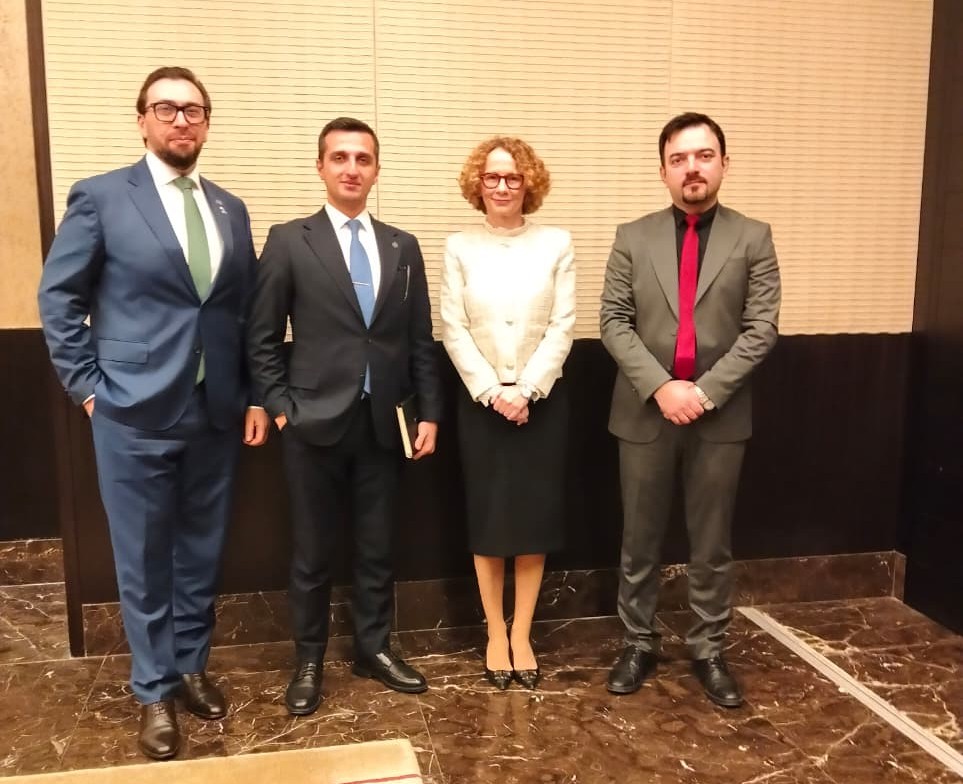
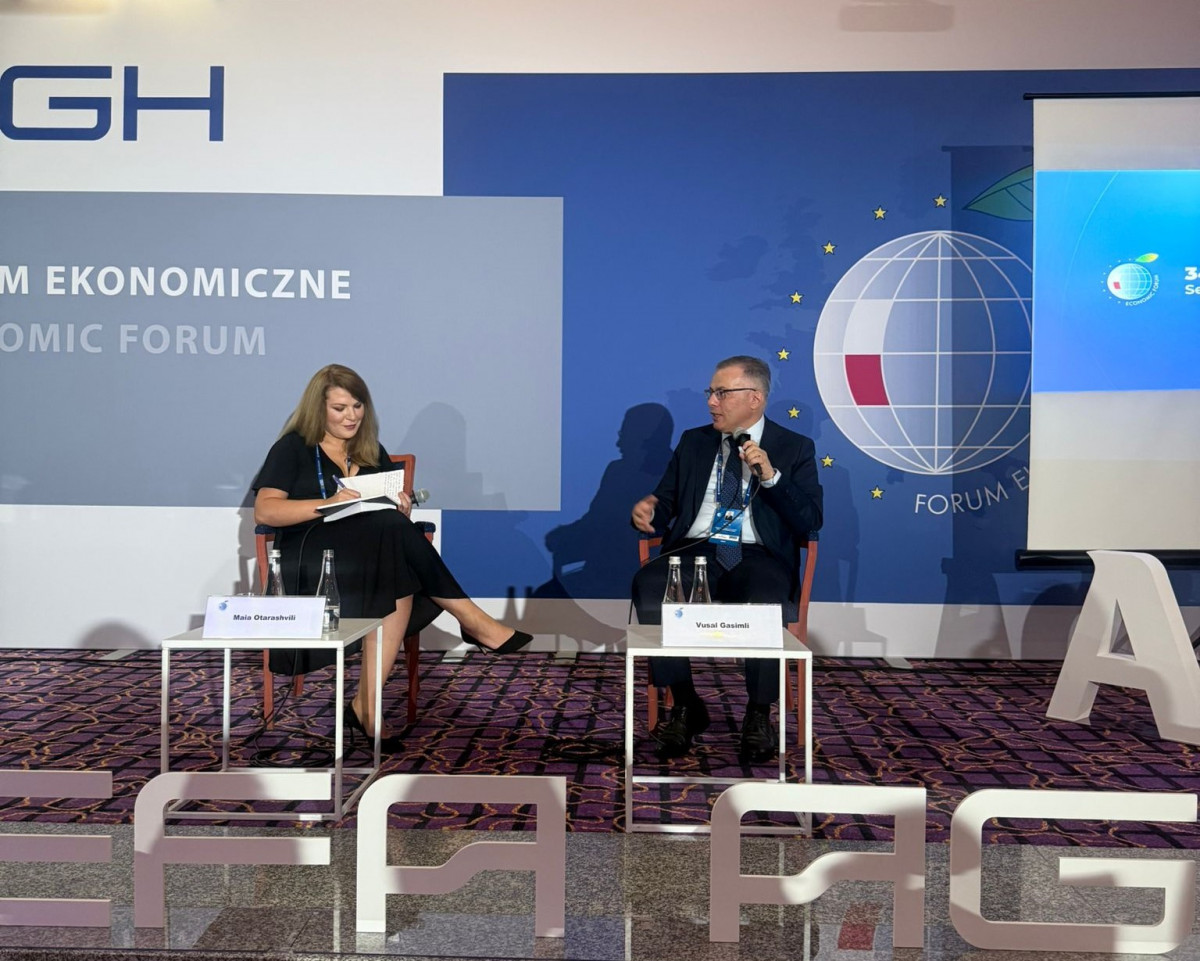
Executive Director of the Center for Analysis of Economic Reforms and Communication, Prof. Vusal Gasimli, delivered a speech at the 34th Economic Forum held in Karpacz, Poland.
This year’s Forum was dedicated to the theme “Time of Transition – What Future for Europe?”. Recognized as the largest discussion platform in Central and Eastern Europe, the Polish Economic Forum brought together public and political figures, economists, experts, and representatives of leading organizations from more than 60 countries.
At the Forum, Vusal Gasimli presented the book “The Middle Corridor: Navigating Current Realities and Embracing Future Prospects”, prepared in partnership with the OECD and the CAREC Institute. Referring to World Bank projections, he emphasized that by 2030, trade turnover between China and the European Union is expected to increase by 30 percent, while trade between the EU and Azerbaijan, Georgia, and Kazakhstan is forecasted to grow by 28 percent. This growth, in turn, necessitates the flexible and efficient management of the Corridor. The new book examines the Middle Corridor not only as a transport and transit route but also as a platform for global economic and political cooperation.
Gasimli highlighted that the idea for the book was first conceived in 2023, during the Karpacz Economic Forum. Written by 22 scholars from 10 countries (Azerbaijan, Türkiye, Kazakhstan, China, the United Kingdom, Serbia, Pakistan, Austria, Spain, and Mexico), the book was published in English by the renowned European academic publisher University Press Târgu Mureş.
The Executive Director underlined that the Middle Corridor is increasingly recognized as a strategic bridge enhancing economic integration and creating multimodal transport opportunities between China and the European Union. The publication stresses that the Middle Corridor has emerged as a new trade route building upon the legacy of the Silk Road. It analyzes ports, border-crossing points, roads, and other infrastructure facilities, while also putting forward specific recommendations for further improvement. Moreover, it explores the energy geopolitics of the Silk Road region and its implications for major powers, as well as the role of initiatives such as TRACECA, One Belt, One Road, the Middle Corridor, and the Zangezur Corridor.
The book devotes special attention to the prospects of the Middle Corridor as an energy route for the European Union, the opportunities for cooperation with Azerbaijan, Kazakhstan, Uzbekistan, and Turkmenistan, and the strengthening of energy ties within the framework of the EU’s strategies for the South Caucasus and Central Asia. It recommends fostering regional trade, encouraging active private sector participation, and ensuring synchronized development of all infrastructure sectors to fully realize the Corridor’s potential. The study also examines how new payment and clearing systems, fintech, and digital finance mechanisms create opportunities for foreign trade, emphasizing the role of national currencies, digital banking, and cryptocurrencies in regional financial cooperation. Furthermore, the book discusses bilateral trade agreements, the importance of border regions, investment opportunities in infrastructure, and the need to expand the participation of local small and medium-sized enterprises in logistics processes by creating equal conditions for them.
During the presentation, issues such as infrastructure provision in the Eurasian region, oil and gas transportation in the Caspian basin, the establishment of a unified legal framework for the use of the Corridor, and the ratification of adopted conventions were discussed. It was underlined that the Middle Corridor is not only a transportation route but also a strategic initiative that opens new opportunities for global trade, energy, finance, education, and scientific cooperation.
For over 30 years, the Karpacz Economic Forum has played a vital role in strengthening cooperation between the European Union and its neighboring countries. Each year, the Forum’s strategic declarations and debates receive wide coverage in international media and attract significant attention from expert communities.