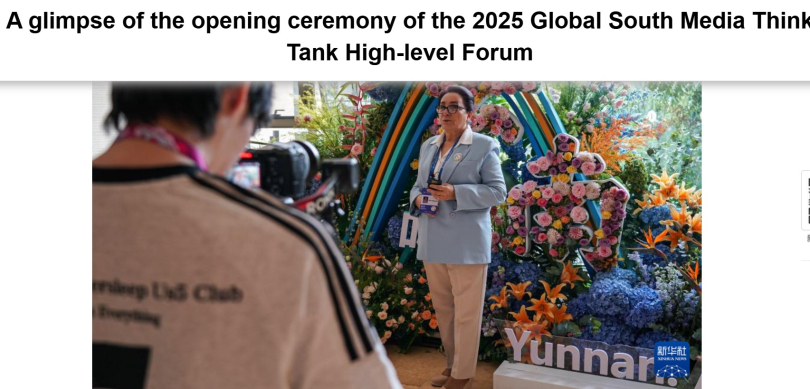
The Forum took place from September 5 to 9, 2025, in Kunming, the capital of Yunnan Province in the People’s Republic of China.
Nearly 500 participants from 110 countries—including journalists, experts, scholars, government officials, and entrepreneurs from international and regional organizations—gathered in Kunming for the Global South Media and Think Tanks Forum 2025. The event was organized jointly by the Xinhua News Agency, the Yunnan Provincial Committee of the Communist Party of China, and the People’s Government of Yunnan Province. This year marked the second edition of the “High-Level Forum of Global South Media and Think Tanks,” following the inaugural forum successfully held in November 2024 in São Paulo, Brazil.
The Azerbaijani delegation took part in the ongoing Global South Media and Think Tanks Forum in China on September 9, 2025. The delegation, led by Ahmad Ismayilov Chief Executive Officer of the Media Development Agency, included representatives from the Social Research Center, the Center for Analysis of International Relations, the Azerbaijan State News Agency (AZERTAC), and the Media Development Agency itself.
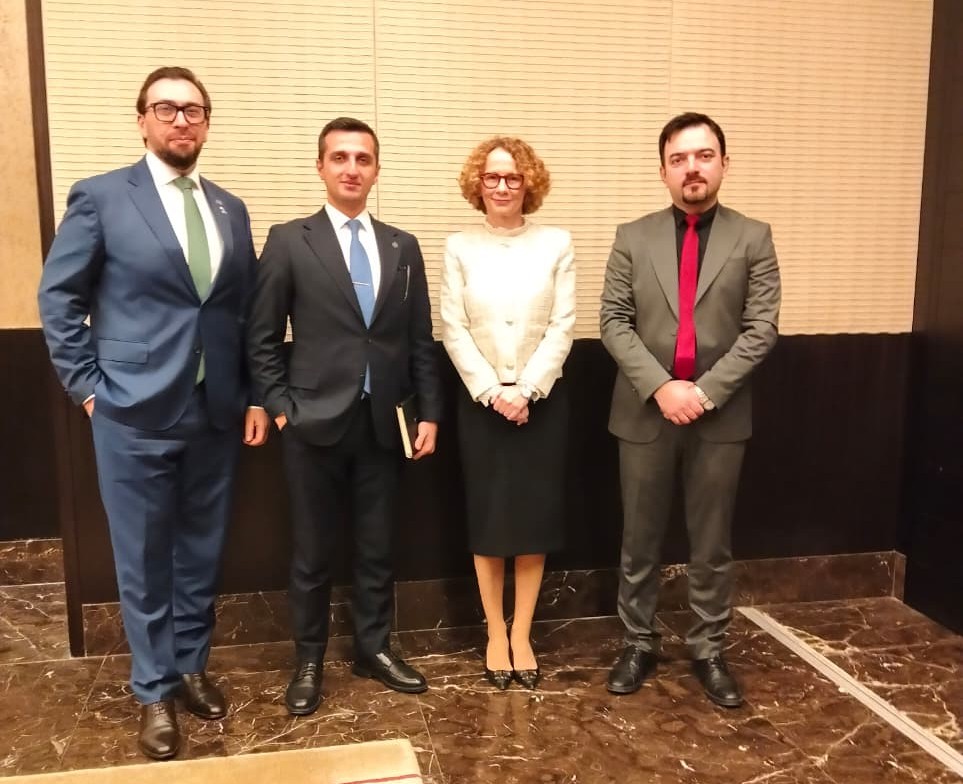
During the Forum, a ceremony was held to exchange the “Memorandum of Understanding on Cooperation” signed between Ahmad Ismayilov and Fu Hua, President of the Xinhua News Agency of the People’s Republic of China.
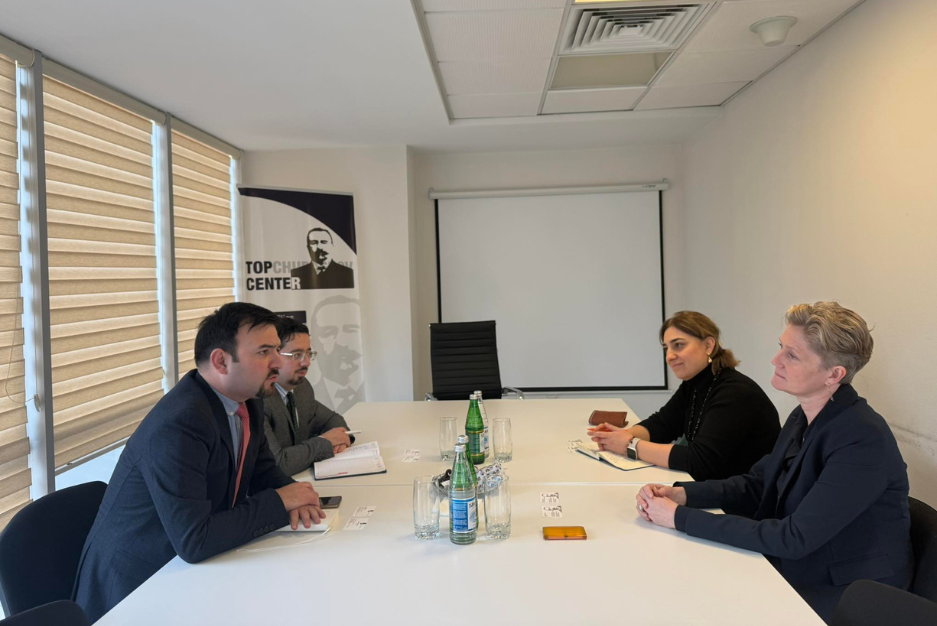
As the Forum progressed, Professor Tahira Allahyarova, a member of the SRC Board, gave interviews to several media outlets, sharing insights and perspectives on behalf of the Social Research Center. Xinhua News Agency published an exclusive interview with the professor:
https://russian.news.cn/20250907/d4607b4008d54453bc4f4b7a70b2d6d1/c.html
It is worth noting that Xinhua News Agency is the official state news agency of the People’s Republic of China and operates as a ministry-level institution under the State Council. Headquartered in Beijing, Xinhua was established in 1931 and, with a staff of 13,000, is China’s largest media organization. Of its 220 news bureaus, 184 are located abroad.
In addition, Professor Allahyarova also gave an interview to the Kunming Information Hub, a channel operating in Kunming, Yunnan, which hosted the Global South Media and Think Tanks Forum 2025. The interview was featured in the Hub’s review titled “Different Faces, One Voice: Exploring Common Solutions in Global South – Kunming.”
This year’s Forum, the second edition of the event, focused on the theme: “Unity and Mobilization of the South in Response to Global Changes.” On the first day, participants attended opening speeches on “Enhancing the Power of the Global South.” Speakers included the head of the Yunnan Provincial Committee of the Communist Party of China, President of the Xinhua News Agency, and others.
Guests from China and other countries expressed optimism that media and think tanks could promote joint exchange and cooperation, supporting the modernization efforts of Global South countries, which today account for over 40% of the world’s economy and 80% of global economic growth. Such collaboration is expected to foster collective efforts toward building a shared future for humanity. The Global South has increasingly become a central force in maintaining international peace, accelerating global development, and improving global governance.
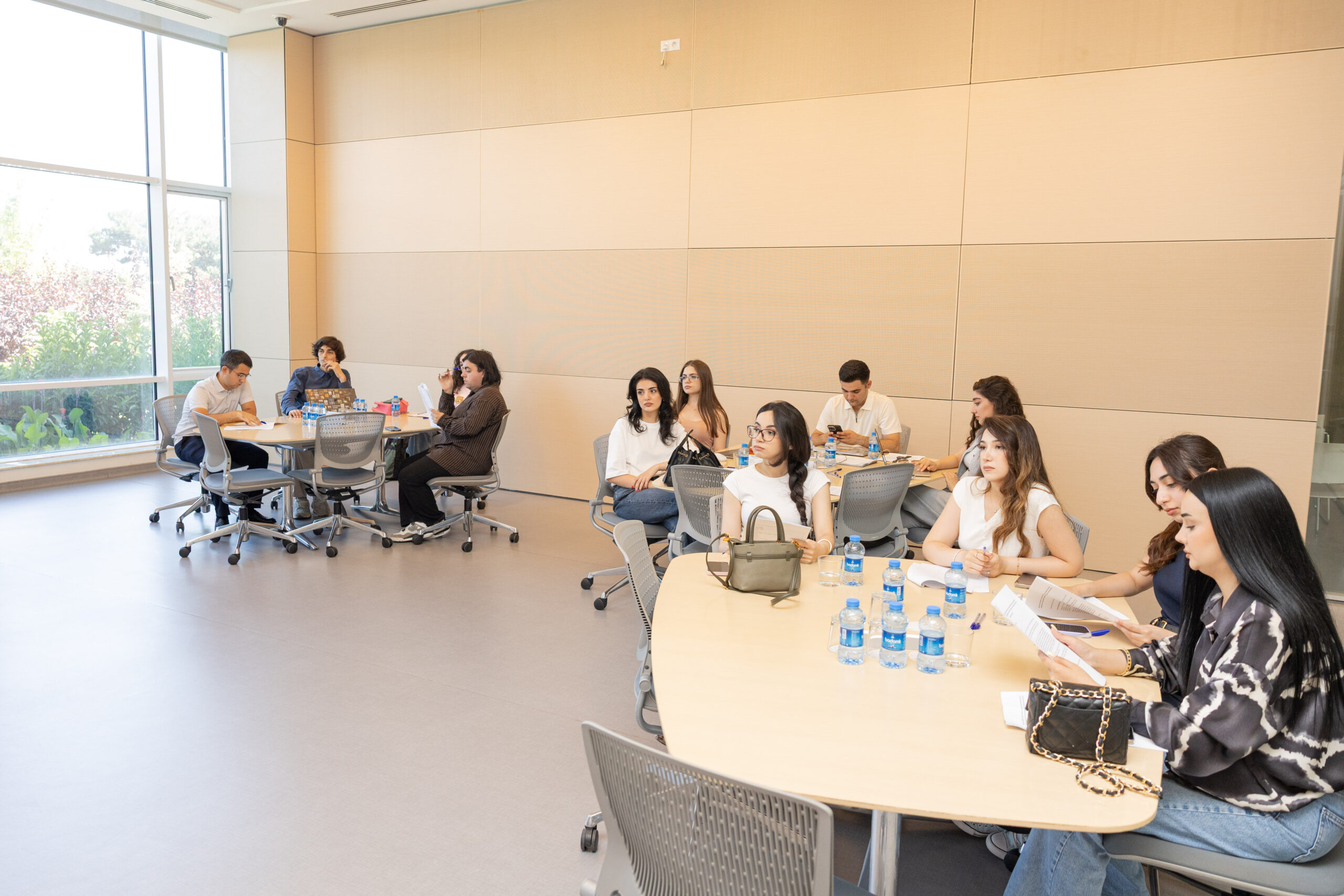
The Forum brought together representatives from media, think tanks, governments, and the business sector across the Global South to engage in in-depth discussions on four main themes: peace consensus, development dynamics, new avenues for cooperation, and intercivilizational dialogue.
The event also featured the publication of key documents, including the Yunnan Consensus from the High-Level Forum of Global South Media and Think Tanks, as well as a report prepared by the Analytical Think Tank titled “Upholding Cultural Subjectivity Amid the Dynamic Interplay of World Cultures: The Spiritual Cornerstone of China’s Path to Modernization.” The report provides a detailed analysis of China’s contributions to global public thought and intellectual output, framed within the context of contemporary challenges and the pressing questions facing the world today.
The Forum of leading media and think tanks of the Global South demonstrates that, amid profound geopolitical shifts, the Global South is no longer a passive observer but an active author of its own narrative. It is no longer an object to be dominated but a master of its own destiny, and no longer merely a backdrop of history but a driving force within it. A central challenge facing Global South countries is to break the existing model of monopolized international public opinion and discourse, asserting their own dominant positions and establishing discursive influence.
On the second day of the Forum, leading media and think tanks of the Global South held separate panel sessions. The discussions began with the screening of an analytical video titled “Decoding Colonizations of the Mind: Reconstructing Cultural Sovereignty.” The film presented, based on factual evidence, the disruptive global ideological activities often described as the United States’ “soft power”—including USAID, USAID Global Media, and similar actors—and the political technologies aimed at regime change, such as “color revolutions.” It examined the disastrous consequences these interventions have caused in various countries, the unprecedented suffering inflicted on local populations, and in some cases, the effective erasure of states from the political map.
Subsequent speakers delivered presentations within the framework of critical studies on postcolonialism and decolonial theory, under the theme “Decoding Colonizations of the Mind: Reconstructing Cultural Sovereignty.” Drawing on theoretical frameworks, they analyzed state-building, political-ideological, academic, social-cultural, and other discursive strategies.
The Forum produced two key strategic outcomes:
1. The formal establishment of the Global Cooperation and Communication Partners Network of Media and Think Tanks in the South.
2. The official adoption of the Yunnan Consensus of the Global South Media and Think Tanks Forum as a formal document.