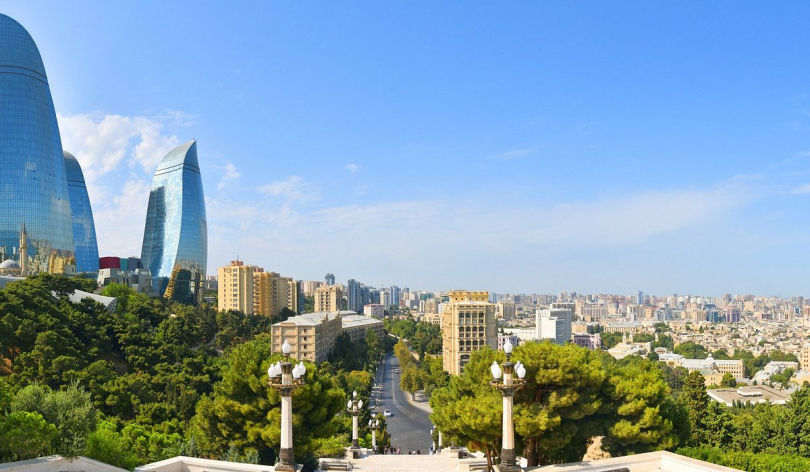
Azerbaijan is entering a transformative phase in urban transport, with Baku emerging as a frontrunner in sustainable mobility across the South Caucasus. The government’s 2025-2030 State Program for improving transport infrastructure outlines an ambitious plan to modernize traditional public transit, expand micromobility options, and revive the city’s historic tram network. This integrated vision combines environmental sustainability, public health, and economic efficiency to create a modern, connected city.
Baku has quickly positioned itself as a regional leader in micromobility. The city currently offers 35 kilometers of bicycle paths across 31 streets and avenues, with plans to expand the network to 100 kilometers in stages, creating one of the largest cycling infrastructures in the Caucasus. Beyond building paths, authorities have installed 300 parking points for micromobility vehicles, completed markings at over 100 locations, added 25 bicycle sections at traffic lights, and created 53 bicycle traffic light sections at 24 intersections. Green-colored bike lane surfacing at road intersections serves as a visual warning system, improving safety for both motorists and micromobility users.
The adoption of micromobility in Baku has been remarkable. There are 4,760 vehicles available for rent, with 77% electric scooters, 18% traditional bicycles, and 5% electric bicycles. Between September and December 2024, operators recorded 850,944 orders covering 2,244,302 kilometers. On average, each bicycle is used 12 times daily, far exceeding the global average of four to five uses. One of the city’s bicycle rental services, launched in August 2024, already serves 46,000 users who have traveled around 215,800 kilometers, supported by 70 parking points for both tourists and daily commuters.
Government policies actively support this transformation. Bicycle and scooter components are exempt from customs duties to encourage local assembly and reduce consumer costs. Amendments to the Code of Administrative Offenses impose fines of 100 Azerbaijani manats for motorists who encroach on bike lanes, demonstrating a strong commitment to cyclist safety. Legislation now explicitly covers small electric vehicles and their operators, providing a clear framework for emerging transport technologies.
Baku’s transport strategy benefits from international expertise. The city has studied successful micromobility systems in Barcelona, Braga, New York, and Miami, adapting global best practices to local conditions. This ensures that Baku’s infrastructure meets international standards while addressing city-specific challenges.
Modernization of the metro is a key part of this vision. During COP29, the European Investment Bank signed a memorandum with Azerbaijan’s Ministry of Digital Development and Transport to support upgrades, expansions, and modernization projects for Baku’s metro, including the construction of nine new stations. Currently serving around 620,000 to 630,000 passengers daily, the metro improvements aim to increase ridership and reduce car dependency in a city of 2.4 million people. The broader transport strategy focuses on seamless integration between metro systems, metrobuses, high-speed railways, and tram-electric trains, with transport exchange centers designed to allow efficient transfers across modes.
The revival of Baku’s tram network bridges historical heritage and modern urban planning. Operating from 1924 to 2004, the original tram system reached 117 kilometers at its peak. Revival plans focus on strategic routes, including a line from Mehdiabad settlement to Azadliq Avenue via Binaqadi and the “28 May” metro station, and another serving the Seabreeze zone, a major new attraction. Unlike the former network, new tram lines will be shorter and integrated with existing transport rather than operating as standalone systems. The Master Plan for Baku until 2040 explicitly includes tram and metrobus systems, emphasizing the metro as a high-capacity backbone while additional modes serve suburban areas more efficiently.
These initiatives also advance Azerbaijan’s climate goals. With road transport responsible for 91% of national CO2 emissions, transforming urban mobility is critical to achieving the target of a 35% emissions reduction by 2030. In 2024, the city introduced 166 electric buses and 55 CNG-powered buses, with plans for 400 additional eco-friendly buses from private operators. Expanding micromobility infrastructure also promotes active lifestyles and public health, while reducing traffic congestion and individual transportation costs. Global studies show cycling infrastructure can reduce traffic accidents by 24-30%, highlighting safety benefits for Baku’s residents.
Despite progress, challenges remain. The network still needs more connected routes, and safety concerns persist as the city transitions from car-centric design. Cultural adaptation is another hurdle, although high usage rates indicate strong public acceptance. Effective coordination among government divisions is essential to integrate urban planning, transport, and environmental policies, a task addressed through the State Program.
Looking toward 2030, Azerbaijan aims for a comprehensive mobility transformation. Goals include expanding the metro network with EIB support, reviving the tram system along strategic routes, and extending the micromobility network to 100 kilometers. This integrated approach will create a cohesive urban transport ecosystem that serves residents and tourists alike, reduces travel times, and stimulates economic growth by fostering green transport businesses and employment opportunities.
Baku’s transport transformation is quietly changing the way people experience the city. With more bike lanes, new trams, and a modernized metro, moving around has become faster, safer, and more convenient. Beyond improving mobility, these changes are creating public spaces that feel more open and welcoming, encouraging residents to explore their neighborhoods in new ways. As the city adapts, Baku is shaping itself into a model for sustainable urban life in the region, where modern infrastructure and everyday city life meet seamlessly.