Organization of Turkic States Advances Eurasian Trade Connectivity

Executive Summary: The Organization of Turkic States (OTS), comprising Azerbaijan, Kazakhstan, Kyrgyzstan, Türkiye, Uzbekistan, and observers, is leading efforts to enhance the Middle Corridor. This initiative aims to bolster regional connectivity, mitigate trade disruptions from geopolitical instability, and develop sustainable, competitive transport networks through multilateral treaties and infrastructure investments. Recent OTS summits have reinforced commitments…

Read more

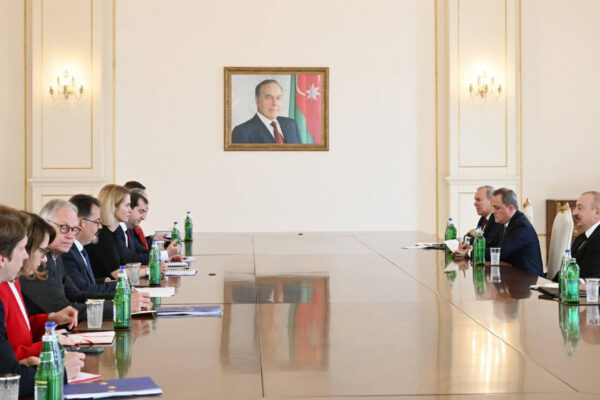
Stalemate Persists in the Armenia-Azerbaijan Peace Process

Executive Summary: Armenia and Azerbaijan remain at an impasse in their ongoing peace process, facing the conditions of withdrawing international lawsuits and agreeing on a ban against third-party military forces along their border. Armenia’s constitutional claims over Karabakh and the dissolution of the OSCE Minsk Group remain sensitive topics. Azerbaijan insists on amending Armenia’s constitution…

Read more

External interference: the main destabilizing factor in the South Caucasus?

The foreign policies of the architects of the ‘rules-based’ world order, primarily the United States and leading EU member states like France, have for decades been associated with the practice of ‘intervention.’ This includes both direct military interventions and the use of soft power. Today, however, countries are increasingly vocal in their unwillingness to allow…

Read more

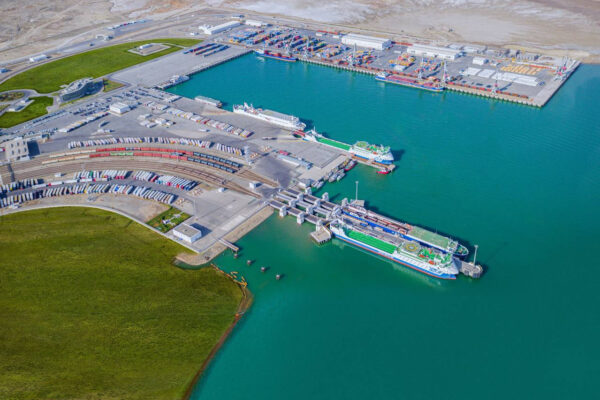
Azerbaijan’s Contribution to Regional Connectivity

Azerbaijan’s focus on improving transportation infrastructure has been central to its role in enhancing regional connectivity, especially in the broader context of linking Europe and Asia. As part of the effort to revive the historic Silk Road, significant progress has been made in expanding trade and transportation networks—particularly rail and maritime routes that facilitate intercontinental…

Read more

The AIR Center hosted a presentation of the book titled “Armenian nationalist irredentism and the Karabakh wars”

On February 5, 2025, the AIR Center hosted a presentation of the book titled “Armenian nationalist irredentism and the Karabakh wars.” In his opening remarks, Chairman of the Board of the AIR Center Farid Shafiyev emphasized that certain narratives promoted by Armenia and the Armenian diaspora—such as the claim that the events leading to the…

Read more

A Year in Review: Armenia and Azerbaijan Getting Nearer to Peace

One year ago, in a piece titled “Armenian–Azerbaijani rapprochement: Facing a hurdle,” I concluded that Armenia is stuck between myth and reality and has to move from myths related to ‘imagined communities’ defined by kinship and history to new, pragmatic relations with its neighbors, Azerbaijan and Türkiye.[1] Today, despite some sporadic attempts by the Pashinyan…

Read more

Armenia’s Militarization: Fueling A Security Dilemma In The South Caucasus – OpEd

The “security dilemma” is one of the key concepts in the academic study of international relations and foreign policy. First articulated by John Hertz in 1950 and subsequently analyzed in detail by scholars such as Robert Jervis, Charles Glaeser, and others, the security dilemma describes how actions taken by one state to enhance its security—building…

Read more

Armenia’s confession: Ethnic cleansing of Azerbaijanis and its legacy

When a video of former President of Armenia Levon-Ter Petrosyan confessing to ethnic cleansing against non-Armenians in Armenia and the Karabakh region of the Republic of Azerbaijan at the congress of the terrorist organization “Yerkrapa” in 1993 was revealed 31 years later, it led to serious debate. Yerkpara was founded by Armenia’s first defense minister,…

Read more