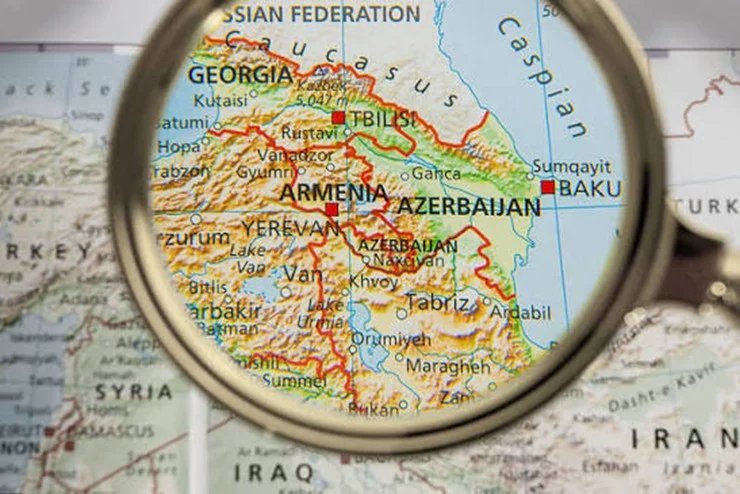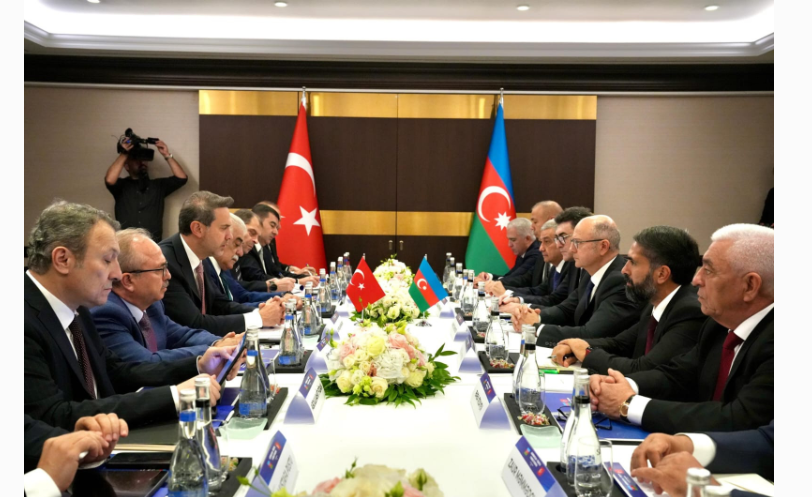
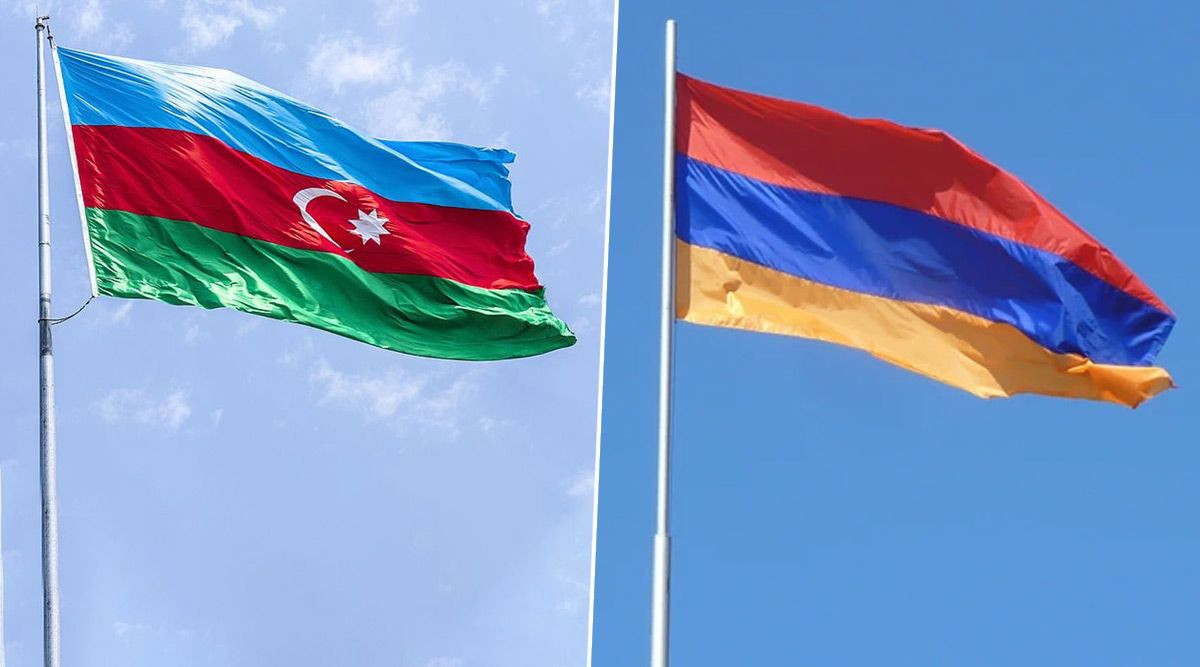
In recent years, the momentum generated in the normalization of relations between Azerbaijan and Armenia has brought the sides closer to permanently overcoming a conflict that lasted for around three decades. Since 2020, new geopolitical realities have emerged, creating a tangible basis for the conclusion of a peace agreement between the parties. Within this context, mutual steps such as ongoing discussions on border delimitation, the reopening of communications, and the establishment of diplomatic relations are all signs of real progress. Hence, the current moment represents a historic opportunity to establish sustainable peace between the two nations, urging not only responsible conduct from political representatives but also a constructive and peace-oriented approach on the broader, societal level. Ensuring long-term regional stability carries strategic significance for all stakeholders, both in terms of economic development and security. Accordingly, at the current stage, the principal objective of both sides must be the formalization of de facto peace within a legal and institutional framework – namely, the signing of a comprehensive peace agreement, writes Dr. Matin Mammadli, Head of Department at the Baku-based Center of Analysis of International Relations (AIR Center).
Nevertheless, despite various positive signals, several factors continue to exert a negative influence on the peace process. In particular, the growing activity of revanchist forces in Armenia and the reintroduction of rhetoric associated with the former conflict present serious risks. These circles demonstrate reluctance to accept existing realities and attempt to instill unrealistic expectations within society. By considering the political platforms of the main opposition forces ahead of the upcoming June elections, their public statements, and their affiliations with certain external centers of power, it becomes evident that the situation remains highly complex. It should also be emphasized that the ideology of revanchism prioritizes the restoration of the former status quo rather than regional integration, thereby posing a threat both to regional stability and to Armenia’s own developmental prospects. Moreover, recent statements by certain Armenian officials have contradicted the peace agenda which Yerevan has officially been supporting. Such inconsistent messaging undermines trust between the parties. In this regard, remarks by the Speaker of the Armenian Parliament, Alen Simonyan, are particularly noteworthy. He called for the release of individuals affiliated with the former illegal separatist regime, currently detained in Baku 1 and whose crimes have been validated through judicial proceedings. At the same time, he voiced unfounded allegations concerning the “destruction” of Armenian heritage in the Garabagh region of Azerbaijan. These assertions are not only detached from reality but are also devoid of legal and political substantiation. The individuals in question have been held accountable for specific crimes in accordance with both international legal norms and the domestic legislation of Azerbaijan. Their activities were in violation of not only Azerbaijani law but also of international humanitarian law.
Despite certain unconstructive claims by Armenian officials, the Government of Azerbaijan has for now adopted a pragmatic and restrained position. This approach is primarily aimed at preserving the peace process and preventing renewed escalation in the region. At the same time, Azerbaijan possesses sufficient legal, political, and moral grounds to bring claims against Armenia as a state, as well as against individual Armenian political and military leaders, before international judicial bodies. This legal reality can be summarized as follows: Armenia bears responsibility, both as a state and through individuals accused and convicted of grave offenses, for war crimes, crimes against humanity, and other violations committed in the formerly occupied territories of Azerbaijan. It is well documented that during the occupation, large-scale destruction was carried out in Azerbaijani territories, material and cultural heritage was looted, and the Azerbaijani population was subjected to ethnic cleansing. These facts have been reflected in reports produced by various international organizations and expert groups specializing in international law 2. Undoubtedly, such acts constitute serious violations of international law, and are rightly characterized as war crimes and crimes against humanity. As noted earlier, the former representatives of the illegal separatist regime currently detained in Baku have been prosecuted precisely for their involvement in these crimes. In this regard, calls for their release contradict fundamental legal principles and bear the character of political manipulation.
Within Azerbaijani society, legitimate questions arise as to why, despite the scale of these crimes, Armenia has not been brought before international courts and why more stringent legal measures have not been undertaken. These concerns stem from a sense of justice and historical memory. However, the state’s approach must be evaluated within a broader strategic framework. The Azerbaijani leadership recognizes that long-term peace cannot be achieved solely through legal measures but also requires sustained political dialogue and the gradual development of mutual trust. At the same time, Azerbaijan’s restraint also has its limits. Should Armenian officials continue to rely on unfounded and non-constructive rhetoric, the peace process would be seriously undermined. In such a scenario, Azerbaijan may be compelled to adopt more decisive legal and political measures. It must also be noted that Armenia is currently undergoing significant internal political processes, including an electoral period. Consequently, certain statements may be interpreted as populist rhetoric aimed at a specific domestic audience. However, jeopardizing the peace process for internal political purposes is neither prudent nor rational and may ultimately prove detrimental to Armenia and its national interests in the long term.
In conclusion, the successful outcome of the peace process between Azerbaijan and Armenia depends in large part on responsible conduct and a constructive approach from both sides. Failing to seize the present historic opportunity could generate new security risks for the region. While misleading and unfounded rhetoric may yield certain politicians in Armenia short-term political dividends, it poses a serious threat to the prospects of achieving sustainable and resilient regional peace. In this context, the Armenian political elite, in particular, must adopt a more balanced and responsible position which aligns entirely with the peace agenda. The instrumentalization of the peace process for domestic political competition risks weakening ongoing normalization dynamics and eroding the trust that has been achieved to date. Azerbaijan, for its part, continues to pursue a policy grounded in international law, prioritizing the pursuit of regional stability. However, the sustainability of this policy is contingent upon reciprocal and adequate conduct by Armenia.
1 https://oc-media.org/yerevan-says-release-of-armenian-prisoners-key-to-genuine-reconciliation-with-baku/
2 Letter to UNSG on war crimes report A-74-676 Eng.pdf