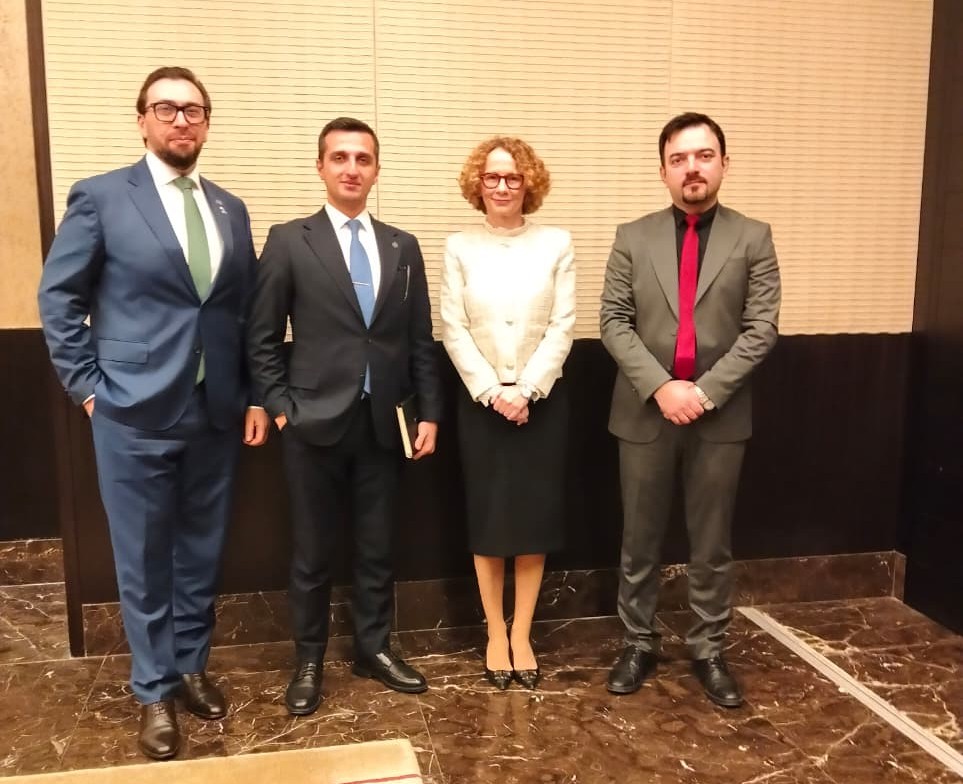
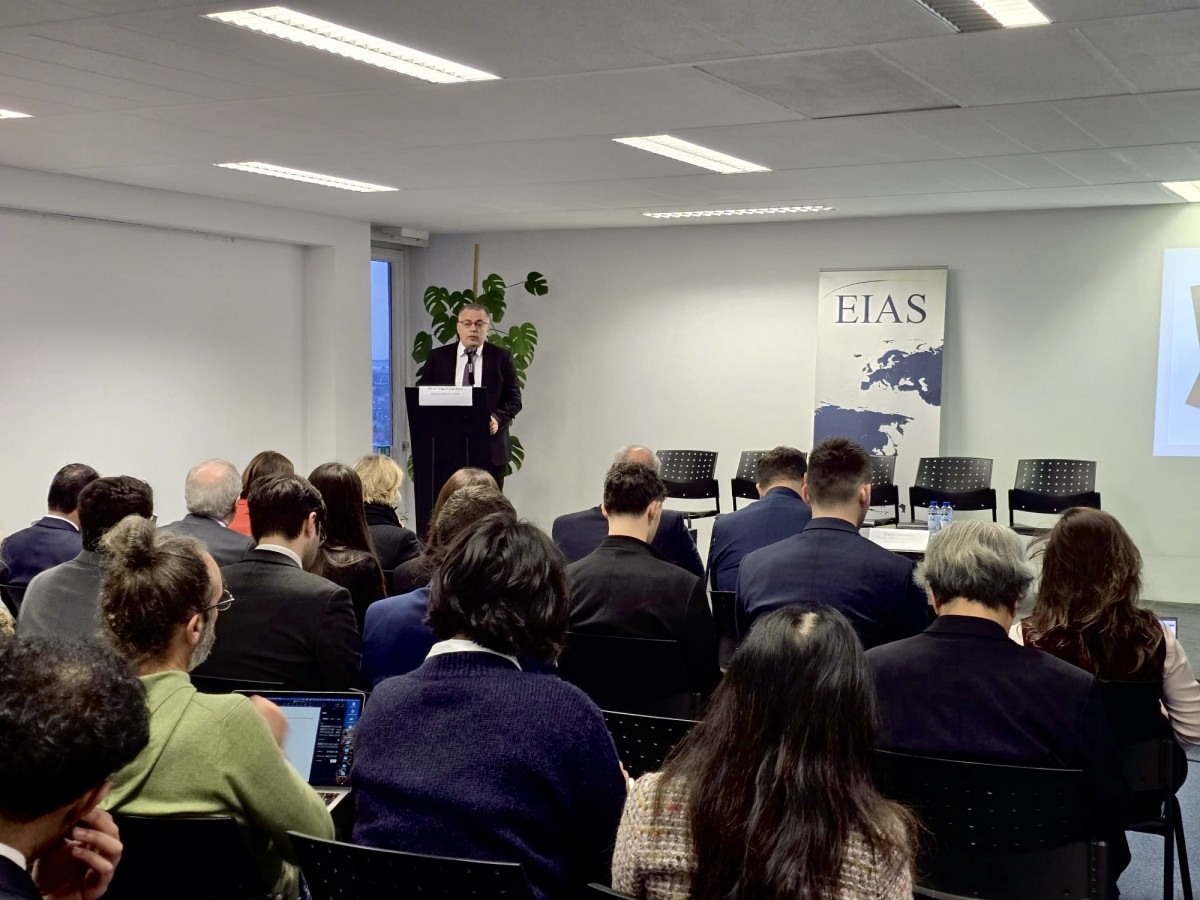
Professor Vusal Gasimli, Executive Director of the Center for Analysis of Economic Reforms and Communication (CAERC), presented the book “The Middle Corridor: Navigating Current Realities and Embracing Future Prospects” at an international conference held in Brussels, the capital of Belgium. The event took place at the European Institute for Asian Studies (EIAS) and brought together more than 80 participants, including scholars, representatives of academic circles, diplomatic missions, European Union institutions, media organizations, and think tanks.
The international conference highlighted the strategic role of the Middle Corridor as a bridge between East and West, underscoring its importance in developing integrated transport and energy linkages, as well as its potential in innovation and green logistics.
Speaking at the event, Vusal Gasimli noted that the idea of writing the “Middle Corridor” book was first proposed during the 2023 Poland Economic Forum. Through CAERC’s partnership with the Organisation for Economic Co-operation and Development (OECD) and the Central Asia Regional Economic Cooperation (CAREC) Institute, 22 scholars from 10 countries — Azerbaijan, Türkiye, Kazakhstan, China, the United Kingdom, Serbia, Pakistan, Austria, Spain, and Mexico — contributed to the preparation of the publication.
The book, which is the result of extensive academic research, has been published in English by the prestigious European publishing house University Press Târgu Mureș.
During the conference, Diana Jablonska, Head of Unit for Regional Strategy & Investment, Neighbourhood East and Türkiye, DG ENEST, European Commission; Erik Van De Sande, Owner, Transport Management Consultants & Surveyors; and Marat Terterov, Executive Director and Co-Founder, Brussels Energy Club delivered remarks emphasizing the international significance of the “Middle Corridor” book.
The Executive Director of CAERC informed participants that strengthening the competitiveness of the Middle Corridor and achieving tangible outcomes directly depend on the transnational transport and energy initiatives implemented by Azerbaijan. He stressed that the Middle Corridor is not only important for expanding transit opportunities but also serves as a strategic platform for business development across various sectors. The corridor enhances the speed and efficiency of cargo transportation, reduces logistics costs, and creates new opportunities for trade and economic cooperation in the region.
It should be noted that “The Middle Corridor: Navigating Current Realities and Embracing Future Prospects” has previously been presented at the 34th Economic Forum in Karpacz, at Ludovika University of Public Service in Budapest, and at the Asia Think Tank Network Forum held in Tokyo, Japan.