The past few months have seen a new wave of information warfare against Azerbaijan by several Western media outlets.
The Independent and The Guardian in the UK, the BBC’s Russian Service, and Poland’s TVP World (Eastern Express programme) have launched another “season” of their own Azerbaijan series, at a time when the information space concerning this region should have been overwhelmingly preoccupied with the Russia-Ukraine war, US-Israel-Iran tensions, global uncertainties, and the most pressing issues on the international agenda, including energy security, clean energy and connectivity.
Right at the start, we referred to these Western media attacks as information warfare. Indeed, it is difficult to place this media campaign under a single, distinctive umbrella (definition), since, like global politics itself, it is also highly complex in nature. But obviously, it embraces all types of disinformation and malinformation, which also paves the way for misinformation.
A distinction can be made here for better understanding.
If a certain media activity aims to illuminate an issue or identify the most important elements in order to communicate them to the public accurately, fairly and effectively, we can call it an information campaign. We can consider this to be of a more tactical nature.
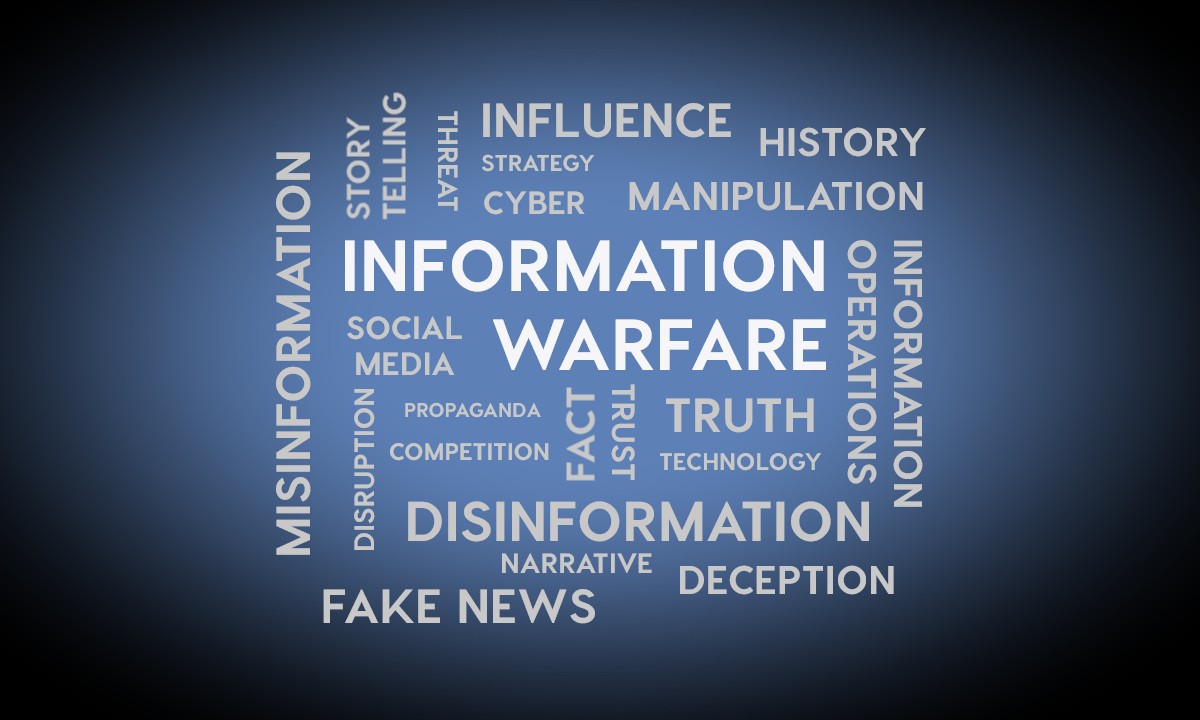
However, information warfare here emerges as a set of organised campaigns designed to deliberately miscommunicate in order to achieve strategic goals. According to the most widely accepted definitions, information warfare is a set of coordinated acts aimed at damaging an information environment that contradicts or threatens the actor’s strategic objectives.
Source: westpoint
Information warfare has always been the norm and one of the most important and defining components of conflicts, whether in an open military confrontation or in an indirect geopolitical rivalry. States and other political actors typically engage in such forms of warfare when they hold conflicting views, pursue competing interests, and share few or no common interests.
In this case, there are no competing interests among Azerbaijan, the EU and the UK. At the same time, the countries in which these disinformation campaigns operate are increasingly seeking to deepen their strategic and political ties with Azerbaijan.
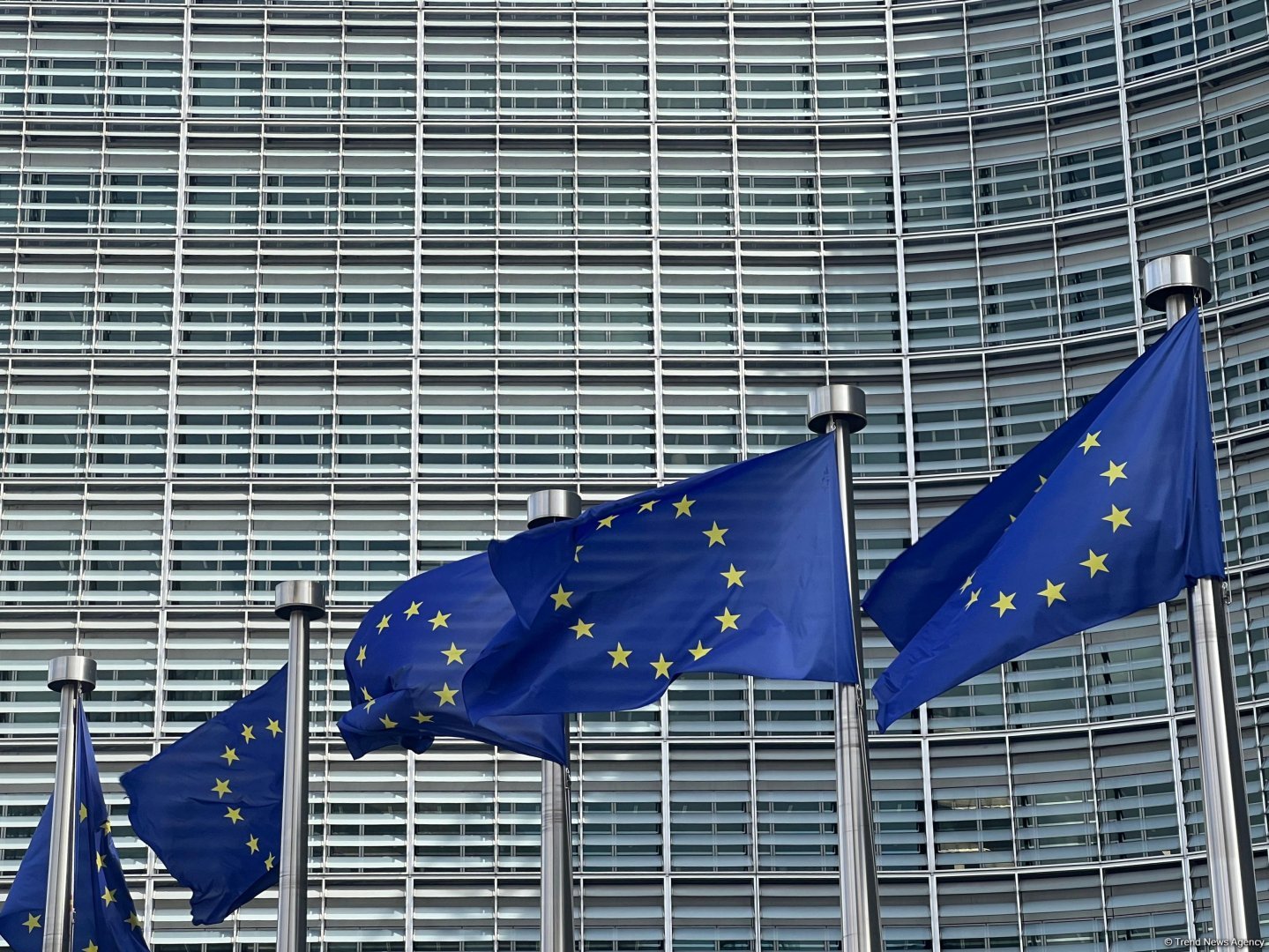
For example, the frequency and level of engagement by the European Union this year demonstrate the growing strategic importance attached to Azerbaijan, particularly in the fields of energy security and connectivity. President of the European Council António Costa visited Azerbaijan on 11-12 March, followed by EU Foreign Policy Chief Kaja Kallas on 5 May and European Commission President Ursula von der Leyen on 1-2 July. Taken together, these high-level visits underscored the EU’s recognition of Azerbaijan as a “reliable and trusted energy partner”, as well as a key transit hub for the Middle Corridor.
Against this backdrop, the renewed focus on Azerbaijan by certain media outlets raises questions about the contrast between Azerbaijan’s growing strategic importance and the way these outlets portray the country.
During her two-day visit to Azerbaijan, European Commission President Ursula von der Leyen said in a press statement:
“We have not forgotten that at a time when Russia weaponised energy and turned off the gas to Europe, Azerbaijan stepped in. The Southern Gas Corridor indeed strengthened Europe’s energy security, and it is a remarkable success story.”
“Now we are preparing the next chapter. Azerbaijan is investing in the energy of the future, such as your plans to develop offshore wind energy in the Caspian Sea. You have both the ambition and, of course, the potential to become a hub for clean electricity, and this fits perfectly with Europe’s own clean transition.”
This makes the contrast between Azerbaijan’s evolving geopolitical role and the narratives promoted by certain media outlets particularly noticeable.
To explain further, the end of the Russia-Ukraine war does not seem to be near, and Western political analysts and think tanks remain far from optimistic about the prospects for a swift resolution. The title and subtitle of an article authored by Sean Wiswesser, a former CIA Senior Operations Officer, summarise it all: “Wars do not end when the guns fall silent. They continue inside institutions, societies, and the minds of the citizens who fought them.”
Tatiana Stanovaya, a Senior Fellow at the Carnegie Russia Eurasia Center, says there is little room for optimism. “For the Kremlin, the war is existential. It’s not just about seizing control of towns and villages…” “…there will be no final settlement either now or in the foreseeable future. Negotiations may intensify, a short-term ceasefire is possible, and documents may even be signed. But overall, this simulation of negotiations can only lead to the simulation of a ceasefire and the simulation of a settlement.”
So, a simulated settlement will do little to ensure a secure, durable and predictable energy and connectivity environment for Europe.
The situation around Iran also points to a bleak future. US President Donald Trump said that “the war’s going to end immediately after the election because they [Iran’s leaders] can’t hold out any longer”.
Given that neither the United States nor Israel has achieved its stated end goals, the regional situation is likely to remain volatile and unpredictable even if active military operations cease. This instability could have broader implications for global trade, particularly if disruptions to the flow of Middle Eastern oil and gas occur through the Strait of Hormuz. Any prolonged disruption to these energy routes could have significant repercussions for global energy markets, trade flows and economic stability.
So, what strategies can the EU adopt to mitigate and safeguard itself against the potential ramifications?
An opinion piece titled “How Will the Iran Conflict Hit European Energy Markets?” by Bruegel, a specialised think tank on international economics, answers this question:
“For Europe, the renewed US/Israeli conflict with Iran is a reminder that in a structurally tighter and more globalised gas market, fragmentation is costly. The precautionary instruments put in place during the energy crisis, including EU-level coordination of gas storage refilling and joint efforts to strengthen security of supply, should be preserved – not dismantled.”
This, in turn, underscores the necessity for the European Union (EU) to act as a coherent and unified entity and, where possible, to speak with one voice. While the EU’s official position emphasises the deepening of strategic relations with Azerbaijan and the further development of bilateral cooperation, the emergence of a disinformation campaign from a broadcaster based in an EU member state and funded by that government raises significant questions regarding the coherence of the Union’s external policies.
The EU’s limited capacity to act as a unified geopolitical actor has long been identified as one of its central structural shortcomings. Unless the Union is able to address persistent divergences in areas such as defence, energy, security and decision-making, the cohesion and strategic autonomy of the European project will remain vulnerable to internal fragmentation. The war in Ukraine has particularly exposed these institutional and political limitations, demonstrating the difficulties the EU faces in formulating and implementing a coherent response to major geopolitical challenges.
These shortcomings may also have significant repercussions for the EU’s relations with its strategic partners. Inconsistency between the Union’s declared policies and the positions or actions of individual member states can weaken the EU’s credibility and raise doubts about its reliability as a predictable and trusted international partner.
Turning to TVP World’s Eastern Express, the programme focuses primarily on political developments, security issues and current affairs across the former Soviet space. Indeed, it is important to acknowledge that media outlets are free to investigate and report on any topic. Nevertheless, a selective attitude can also be observed here. The programme’s treatment of the post-Soviet space is particularly noteworthy, as certain countries appear to receive comparatively limited attention. This is especially evident in the case of the Baltic states, which are among Poland’s closest regional partners and share with Warsaw similar perceptions of the security threat posed by Russia.
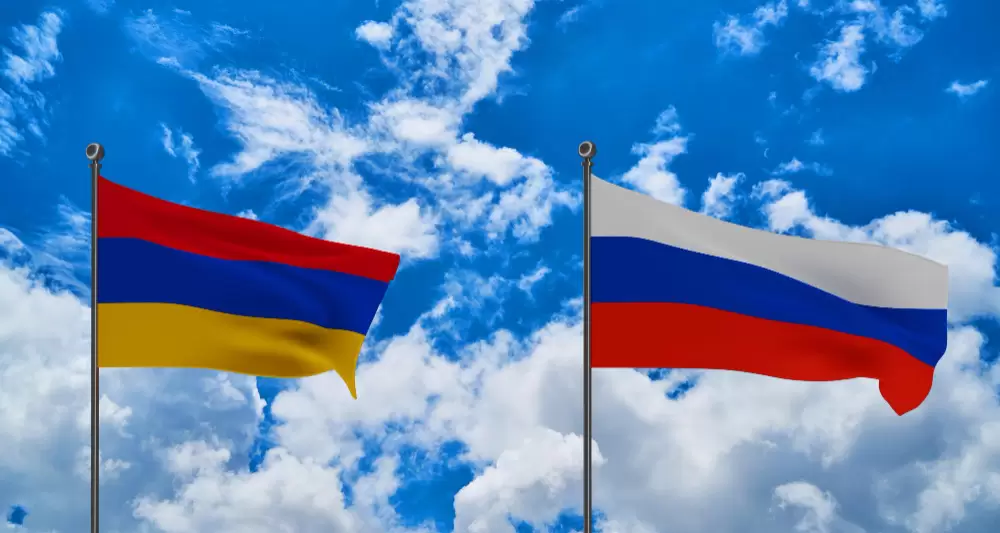
A similar selectivity can be observed in the programme’s treatment of political narratives. In a number of its editions, Armenia is presented primarily as a democratic state increasingly confronting Russian influence. This conclusion highlights that the programme lacks sufficient research on the state of Armenia-Russia relations, particularly following the imposition of Western sanctions on Russia. According to reports, Armenia’s exports to Russia tripled in 2022 and subsequently doubled between January and August 2023. Eastern Express has failed to examine this development, even though Armenia’s political relations with Russia have significantly deteriorated in recent years and bilateral trade between the two countries has continued to flourish. The selective nature of this coverage becomes more apparent in another Eastern Express investigation, titled “Russia’s Sanction-Skirting Network Spreads Across Eurasia.”
Despite the substantial growth in trade between Armenia and Russia following the outbreak of the war in Ukraine, Armenia was not included in the investigation. Instead, the report focused on Kyrgyzstan and Georgia as potential channels through which Russia may circumvent Western sanctions. This pattern suggests that the programme’s coverage is shaped not only by the scale or relevance of particular developments but also by broader political and geopolitical narratives.
Source: pubaffairsbruxelles
The contrast in framing is also difficult to overlook. When it comes to Armenia, the titles are relatively neutral and investigative in style. However, when Azerbaijan is the subject, the framing is notably more negative. Consider the following titles used by TVP World for the same programme, Eastern Express.
- “Armenia’s turn to the West: Can it balance the EU and Russia?
- “Armenia’s Western pivot haunts Georgian Dream”
- “Armenia turns a new page ahead of elections”
- “Armenia: A thorn in Russia’s side”
And, regarding Azerbaijan:
- “Azerbaijan’s peace comes with repression”
Fuad Abdullayev, the leading advisor at the Baku-based AIR Center, has elaborated on the origins of this information warfare. Abdullayev’s main conclusion is that the recent international campaign against Azerbaijan is not merely a collection of independent humanitarian or human rights initiatives, but rather appears to be a coordinated, multi-channel political and information campaign involving Armenian diaspora organisations, lobbying networks, political forces in Armenia, and elements of Armenia’s state institutions. According to the author, these actors reinforce one another through media, lobbying, parliamentary diplomacy, legal mechanisms and humanitarian initiatives to internationalise the issue and put pressure on Azerbaijan.
Azerbaijan’s Foreign Ministry has expressed a strong protest regarding “the biased, non-objective and completely unacceptable allegations against the Azerbaijani state and the country’s leadership”.
It emphasised that, amid the normalisation and peace process between Azerbaijan and Armenia, and Azerbaijan’s determined efforts to ensure lasting peace, stability and security in the region, the dissemination of information distorting the truth has raised questions on the Azerbaijani side.
The ministry described the dissemination of negative content against Azerbaijan by a public broadcaster funded by the Polish government as “an unfriendly step that contradicts the existing spirit of the partnership between the two countries and could seriously damage bilateral relations.”
From a theoretical perspective, the episode of the Eastern Express programme dedicated to Azerbaijan is a clear example of cognitive bias rooted in an Orientalist approach. This is not the first such case Azerbaijan has faced. The AIR Center’s 2022 report, International Media Coverage of the Second Karabakh War, has clearly identified three major factors underlying cognitive bias in Western media: Orientalism, Turkophobia and Islamophobia.
Last but not least, an objective investigation should never present a pre-packaged conclusion to the audience. Rather, it should delve into the details, present verified facts and allow the audience to draw its own conclusions. In this regard, headlines used by Eastern Express also lack this quality, as they tend to draw a specific conclusion from the outset rather than allowing readers to examine the evidence and form their own opinions.